

Is there a kanji representation for the French city of Metz? The answer is no, but this simple fact opens the door to a deeper exploration of how Japanese people perceive foreign cities. In Metz, flowing rivers, lush parks, and cultural landmarks coexist, forming an environment that resonates deeply with Japanese values of serenity, beauty, and tradition.
There Is No Kanji for Metz (Metz)
Why Is Katakana Used Instead?
In the Japanese language, katakana is the standard method for representing foreign place names. While old-fashioned representations such as “倫敦” (London) and “巴里” (Paris) were once used, today these kanji forms are rarely seen outside of historical texts or literature. Modern Japanese overwhelmingly prefers katakana for readability and accuracy in pronunciation.
In the case of “Metz,” no suitable or established kanji exists. Any attempt to assign characters—such as “雌” or “滅”—may lead to unintended or even negative interpretations. Therefore, the name “Metz” is consistently written in katakana.
Trends in Kanji Use for Foreign City Names
| City Name | Archaic Kanji Form | Modern Representation |
|---|---|---|
| Paris | 巴里 | Paris (パリ) |
| London | 倫敦 | London (ロンドン) |
| New York | 紐育 | New York (ニューヨーク) |
| Metz | None | Metz (メス) |
Japanese Perceptions of Cities with Water and Greenery
“Cities with Water” Bring Mental Serenity
Water holds special meaning in Japanese culture.
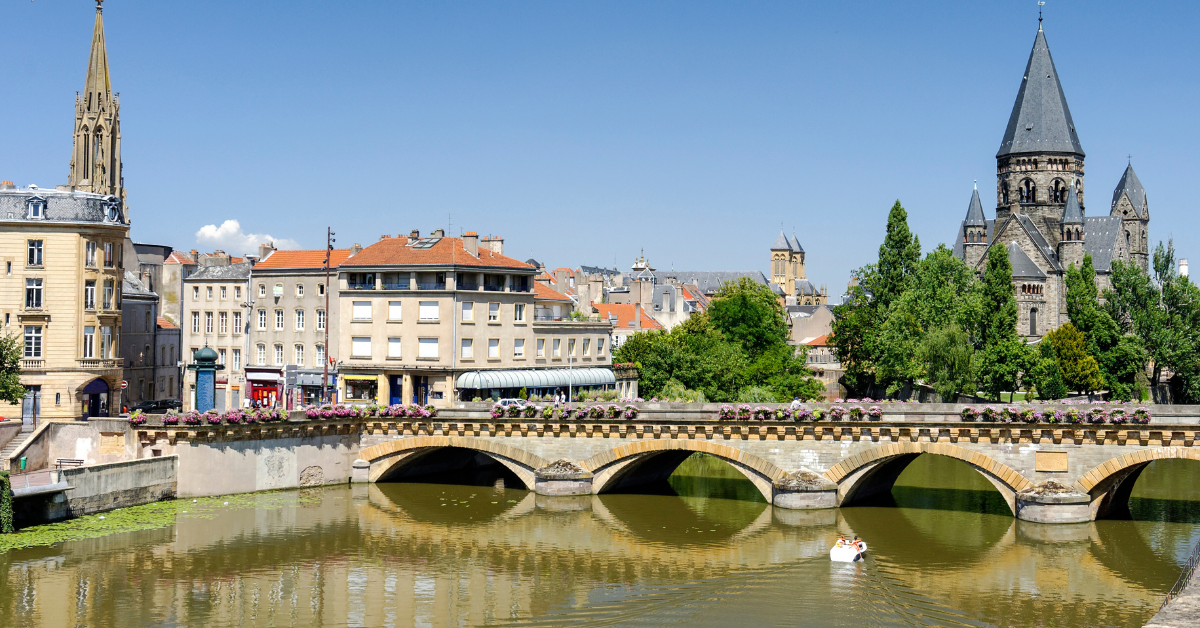
It symbolizes tranquility, purity, and calm. Cities with rivers or canals are often described as “graceful,” “relaxing,” and “emotionally soothing.” Metz, with the Moselle River running through it, offers landscapes that are both peaceful and memorable. Riverside benches, bridges, and promenades become communal spaces for reflection and relaxation.
Effects of Urban Water Elements
| Element | Value Perceived by Japanese Visitors |
|---|---|
| River/Canals | Scenic beauty / Emotional healing |
| Sound of water | Calmness / Mental relaxation |
| Riverside seating | Ideal for reading or quiet conversation |
| Night view by water | Romantic / Escapist experience |
Why Green Urban Spaces Are So Reassuring
A key charm of Metz lies in the abundance of public greenery. Among French cities, Metz stands out for its eco-conscious urban planning. Parks are maintained across the city, not just for aesthetics but as vital public resources. To Japanese visitors, a city’s green space is a strong indicator of its livability—especially for families and the elderly.
Why Greenery Matters in Cityscapes
| Type of Green Space | Impressions Among Japanese Tourists |
|---|---|
| Large parks | High quality of life / Comfortable lifestyle |
| Tree-lined streets | Great for walking / Health-conscious living |
| Small resting areas | Inviting and inclusive urban design |
| Flowers and benches | Well-maintained and visually pleasing |
Metz as a City Where Sports Culture Thrives
FC Metz as a Symbol of Community Engagement
FC Metz, the city’s professional football club, plays an integral role in the community. Competing in France’s top division at times, it has become a source of local pride. The club’s stadium, built along the Moselle River, represents harmony between nature and urban infrastructure, a concept that strongly appeals to Japanese values.
Everyday Sports for All Citizens
Beyond professional leagues, sports are a daily activity for citizens of all ages. Whether it’s jogging, cycling, or playing basketball, Metz offers a variety of public facilities in parks and open spaces. This daily integration of physical activity reflects a healthy and inclusive urban environment, highly regarded by Japanese visitors.
Sports Culture in Everyday Life
| Activity Type | Impact on Residents and Visitors |
|---|---|
| Watching FC Metz | Sense of unity / Community involvement |
| Jogging | Well-being and safe public spaces |
| Bike paths | Eco-friendly / Active lifestyle support |
| Exercise equipment | Accessibility for children and seniors alike |
Where Culture and Daily Life Intersect
From Medieval Streets to Modern Structures
Metz’s Old Town is home to buildings dating back to the 12th century, offering a deep sense of historical continuity. Cathedrals, stone-paved streets, and Gothic architecture blend seamlessly into modern life, forming a living heritage. Japanese visitors often express admiration for places where old and new coexist with respect.
Art Museums as Everyday Spaces
The Centre Pompidou-Metz, a branch of Paris’s renowned art museum, stands as a modern cultural hub that blends smoothly into the city. Unlike museums that feel distant or formal, this center engages locals through participatory exhibits, giving Japanese visitors the impression that “art is part of life here.”
Sustainable Urban Planning and Seasonal Beauty
A City Supported by Trams and Bicycles
Metz prioritizes environmentally sustainable transport through its extensive tram system and bike lanes. Residents can travel comfortably without relying on cars, reducing emissions and promoting health. This aligns with the goals of many Japanese cities pursuing similar low-carbon strategies.
Seasonal Changes Enhancing the Urban Landscape
Spring brings fresh greenery, summer offers shade, autumn delivers vibrant foliage, and winter adds a gentle layer of snow—all within the urban landscape. Japanese visitors, who highly value seasonal experiences, often feel a deep connection with cities that visibly reflect nature’s transitions.
Conclusion
Although the French city of Metz lacks an official kanji name, what it offers in character far surpasses what any written symbol could represent.
With its riverbanks, green parks, thriving sports scene, artistic vitality, and sustainable infrastructure, Metz embodies many of the ideals Japanese people seek in a city.
What Metz Offers to Japanese Expectations
| Category | Values Important to Japanese People | Metz’s Features |
|---|---|---|
| Name format | Avoids confusion, easy to pronounce | Consistently written in katakana (メス) |
| Nature | Balanced greenery, water, and seasonal charm | Moselle River, parks, four-season landscapes |
| Sports | Community-based, inclusive, and healthy | FC Metz, accessible public sports areas |
| Culture | Preserves heritage, supports modern art | Cathedral, Centre Pompidou-Metz |
| Urban Design | Safe, sustainable, and human-friendly | Trams, bike lanes, eco-conscious planning |