

“Oviedo,” the capital of the Asturias region in northern Spain, is a city that may not be familiar to many Japanese people. However, it is full of charm—offering a blend of history, art, nature, and sports. In this article, we take the unique hypothetical Kanji rendering “於備衛土” as a starting point to explore Oviedo’s character, how it is perceived by the Japanese, and its appeal in travel, culture, and football.
Does the Kanji “於備衛土” Actually Exist?
In Japanese, foreign place names are typically written in Katakana. Examples include “London,” “Paris,” or “Barcelona.” Yet, as a form of literary or stylistic expression, phonetic Kanji renderings are occasionally used. If one were to write “Oviedo” in Kanji, “於備衛土” might be proposed based on its pronunciation.
This is not an official representation, but rather a creative phonetic interpretation. It does not see practical or widespread use. Still, using Kanji to add a visual or symbolic flavor to foreign words is a unique feature of Japanese linguistic culture, often seen in literature or advertising.
| Place Name | Hypothetical Kanji | Usage Context |
|---|---|---|
| Oviedo | 於備衛土 | Creative phonetic interpretation |
| Barcelona | 波留世露那 | Occasionally in literary texts |
| London | 倫敦 | Found in Meiji-era documents |
Geographical and Historical Background of Oviedo
Oviedo is the capital city of Asturias, located in northern Spain. Nestled in a lush inland plateau, the city is surrounded by mountains and enjoys a temperate, humid climate—not unlike northern Japan, making it comfortable for Japanese visitors.
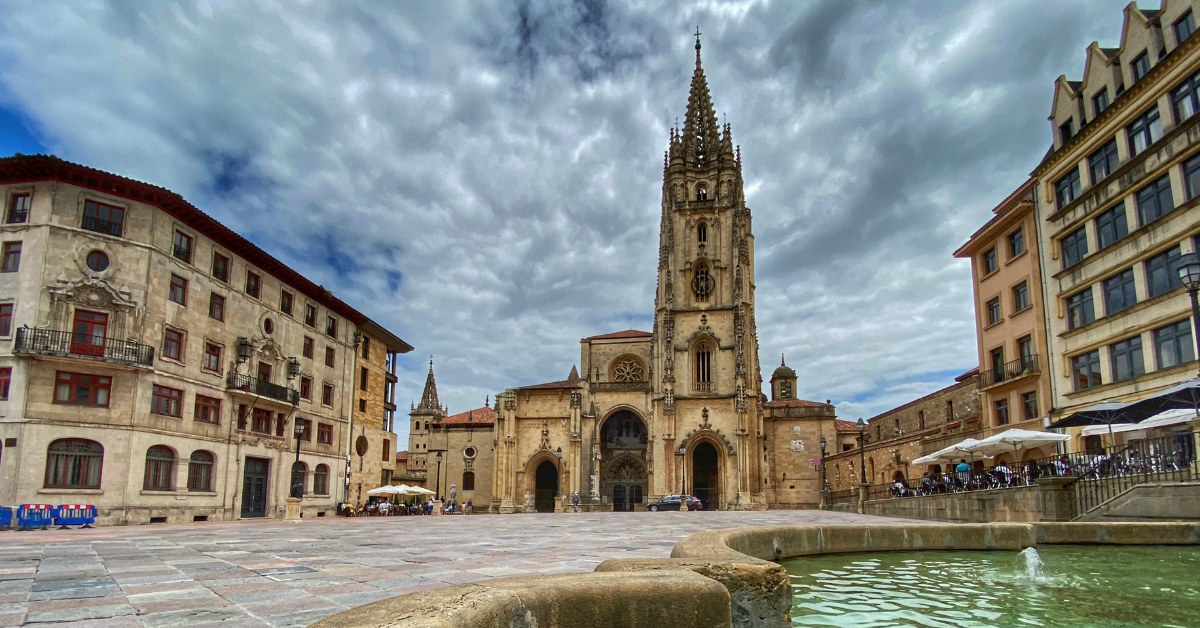
Founded in the 8th century as the capital of the Kingdom of Asturias, it became a strategic base in the early Christian Reconquista. As a result, the old town retains a medieval character, with cobblestone streets and stone buildings reflecting a deep historical atmosphere.
The city is also home to several UNESCO World Heritage Sites, notably the “Pre-Romanesque Monuments of Asturias.”
| Monument Name | Features | UNESCO Status |
|---|---|---|
| Santa María del Naranco | Elegant hilltop church | Yes |
| San Miguel de Lillo | 9th-century architectural pioneer | Yes |
| Cámara Santa | Royal chapel space | Yes |
These features make Oviedo a captivating destination, especially for Japanese travelers with a taste for history and architecture.
Japanese Perceptions of “Oviedo”
Though not widely known in Japan, Oviedo has been increasingly recognized through its football club, Real Oviedo. Moreover, the name “Oviedo” carries a certain fantasy-like sound reminiscent of cities in Japanese anime and RPG games.
There are occasional misunderstandings—some confuse it with the “Gobi” Desert due to phonetic similarity, but they are entirely unrelated. Clarifying this distinction is important for accurate understanding.
| Origin of Image | Description | Remarks |
|---|---|---|
| Football | Real Oviedo as the source | Gaining recognition among fans |
| Sound Impression | Fantasy-like and European | Resembles game/anime city names |
| Confusion | Mixed up with Gobi Desert | Phonetic misunderstanding |
What Japanese Tourists Experience in Oviedo
Visitors from Japan are often surprised by Oviedo’s quiet and calm atmosphere. Despite being a tourist destination, the pace of local life is slow and relaxed. The city is dotted with theaters, museums, and public sculptures, creating an open-air art gallery feel.
One popular attraction is the bronze statue of director Woody Allen, who praised Oviedo. The statue symbolizes the city’s cultural appreciation and serves as a popular photo spot.
Oviedo’s local cuisine is also highly appreciated by Japanese travelers. With dishes like Fabada and Cachopo, the flavors often resonate with those who prefer simple, home-style cooking. Trying the traditional pouring method of “Sidra” (apple cider) is a memorable part of the experience.
| Specialty Dish | Description | Japanese Tourist Feedback |
|---|---|---|
| Fabada | White bean stew | Hearty and satisfying |
| Cachopo | Ham and cheese fried cutlet | Resembles Tonkatsu |
| Sidra | Apple cider with dramatic pour | Fun and engaging |
Oviedo as a Sports City
Real Oviedo, founded in 1926, is a historic football club cherished by locals. Although it currently competes in Spain’s Segunda División (second tier), it has a proud history in La Liga.
Their home ground, Carlos Tartiere Stadium, draws thousands of enthusiastic fans on match days. The club is known for its deep local ties and commitment to youth development, serving as a model for community-based team management.
For tourists, attending a Real Oviedo match offers a genuine local sports experience, far removed from watching on television. The post-match camaraderie, especially over Sidra at a local bar, leaves a lasting impression.
| Club Name | League | Characteristics |
|---|---|---|
| Real Oviedo | Segunda División | Local-focused and youth-oriented |
| Home Stadium | Carlos Tartiere | Capacity of approx. 30,000 |
| Japan Connection | Japanese players speculated | Names like Kagawa and Shibasaki linked in rumors |
Attending a match while traveling is gaining popularity, offering the rare combination of cultural tourism and live sports in a single trip.
Conclusion
The word “Oviedo (於備衛土)” may be unfamiliar, but it carries a poetic rhythm and curiosity for Japanese speakers. While not officially written in Kanji, the act of giving it form shows a willingness to engage with foreign cultures through Japanese expression.
Oviedo is a city of natural beauty, deep history, vibrant culture, and fiery sports spirit. It may still be under the radar for many Japanese, but that only enhances its charm as a destination full of discoveries.