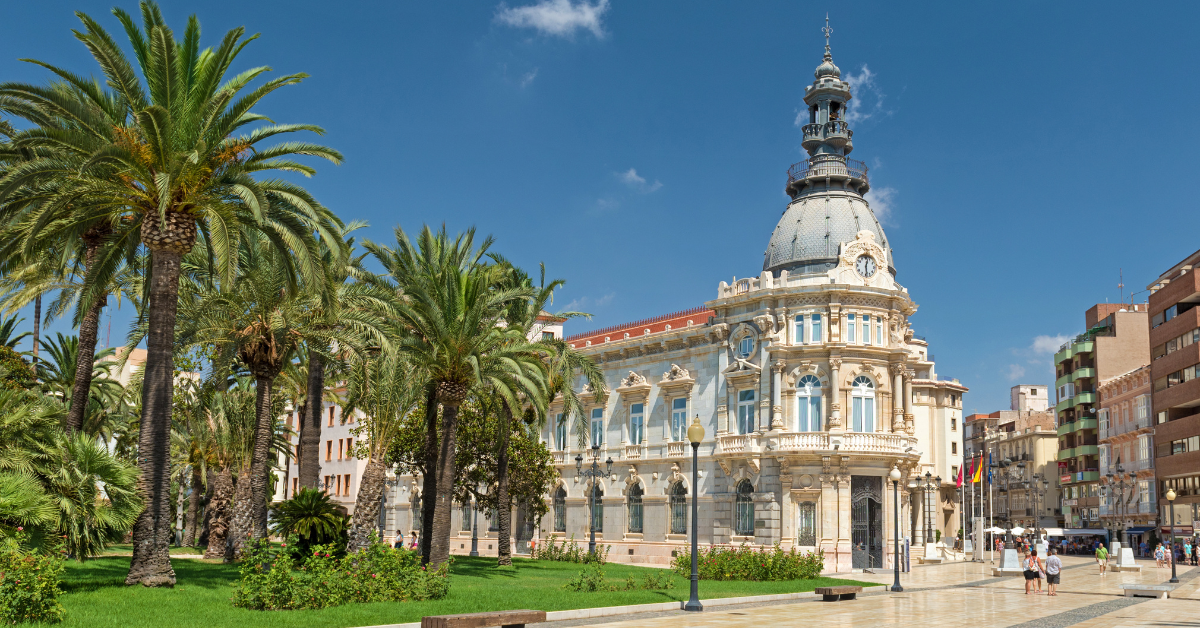


Located in southeastern Spain, Murcia is a city typically written in katakana in Japanese, with no established kanji representation. Although not widely known in Japan, Murcia is gaining attention as the “Kitchen of Europe”, rich in natural beauty, agriculture, history, and even sports. This article explores Murcia from multiple angles, starting with its naming conventions and diving into how Japanese people perceive the city and its true character.
Why Murcia Has No Kanji Representation
The name “Murcia” is generally written in katakana in Japanese. While in Chinese, an onomatopoeic translation like “穆尔西亚” exists, no such version has taken root in Japanese. This is mainly due to the lack of historical and cultural exchanges between Japan and the city.
Below is a comparison of place name representations:
| Category of Place Names | Writing Style | Examples |
|---|---|---|
| General Foreign Places | Katakana | Murcia, Naples, Valencia |
| Historically Established | Kanji | 英国 (UK), 仏国 (France), 西班牙 (Spain) |
| Chinese Phonetic Kanji | Sound-based Characters | 穆尔西亚 (Murcia) |
As shown, cities with limited contact with Japan are commonly represented using katakana rather than kanji.
How Japanese People Perceive Murcia
Murcia remains relatively unknown among Japanese people. When thinking of Spain, major cities such as Madrid, Barcelona, or Seville typically come to mind. As a regional city, Murcia rarely appears in travel brochures or media.
Common impressions of Murcia among Japanese people include:
| Impression Category | Description |
|---|---|
| Low Recognition | Not well-known compared to Spain’s major cities |
| Lack of Information | Few Japanese-language resources make it hard to visualize |
| Rural Image | Many imagine a quiet agricultural town |
Despite these impressions, Murcia is far from ordinary. It is a vibrant and rich city that harmonizes nature, food, and culture.
Why Murcia Is Called the “Kitchen of Europe”
Murcia’s greatest strength lies in agriculture. Thanks to its warm climate and advanced irrigation systems, the region produces a vast amount of fruits and vegetables.
Here are some key crops and their characteristics:
| Crop | Features and Destinations |
|---|---|
| Lettuce | Accounts for over 70% of Spain’s total production, widely exported |
| Peppers | High-quality ingredients essential for Mediterranean cuisine |
| Lemons | Stable year-round production with strong export demand |
| Olives | Used for oil and high-value processed goods |
Murcia also uses greenhouse cultivation and drip irrigation technology, establishing itself as a leader in sustainable agriculture.
Tourism and Historical Background of Murcia
Murcia may not be flashy, but it has many historical and culturally rich attractions that offer a peaceful, immersive travel experience. Its blend of heritage and nature has attracted growing attention.
Key attractions include:
| Landmark | Features |
|---|---|
| Murcia Cathedral | Grand fusion of Gothic and Baroque architecture |
| Roman Theater of Cartagena | Ancient ruins dating back to the 1st century BCE |
| Salsarosa Palace | Former royal residence with beautiful gardens |
| Segura River Walk | A scenic public space cherished by locals |
Murcia is often considered ideal for individual or couple travel, where visitors can quietly absorb culture.
Sports Culture and Community Vitality
Sports are deeply embedded in Murcia’s community. Football in particular enjoys strong local support, with Real Murcia, the regional club, having once competed in Spain’s top division.
The city also has various well-maintained sports facilities and activities:
| Sport | Activities |
|---|---|
| Football | Regional leagues and youth development programs are active |
| Cycling | Home to the annual “Tour of Murcia” race |
| Padel Tennis | A rapidly growing sport in Spain, popular in local gyms |
| Marathon & Triathlon | Numerous public events are held throughout the year |
Sports not only boost local pride and health but also offer engaging experiences for tourists, who can easily watch or participate.
Murcia’s Local Cuisine and Culinary Experiences
Murcia’s food culture emphasizes fresh, home-style cooking. Meals often highlight natural flavors using local produce.
Examples of typical dishes:
| Dish | Description |
|---|---|
| Carne con Tomate | Meat simmered in local tomato sauce |
| Ensalada Murciana | Cold salad with tuna, boiled eggs, and olives |
| Pan con Ajo | Rustic bread with garlic and tomato |
| Arroz con Costra | Baked rice with bone-in meat, a regional version of paella |
By enjoying local food, visitors gain a deeper connection with Murcia’s everyday life.
Conclusion
Although Murcia has no official kanji representation, the depth of its cultural, agricultural, and social appeal is undeniable. From its role as a top agricultural region, its quietly majestic cultural heritage, its sports enthusiasm, to its culinary delights, Murcia is a city filled with vibrant local identity.
While still relatively unknown in Japan, it holds untapped potential waiting to be discovered. Even without kanji, the name “Murcia” in katakana carries authentic meaning and value. For those seeking real experiences, Murcia is more than worth the attention.