
Bucharest, the capital of Romania, is a city that attracts attention for its unique sound and European charm. Given that it has no official Kanji name, how do Japanese people perceive this city? This article explores the background behind the name representation and offers insights into the city’s appeal from the perspectives of tourism, culture, sports, and food.
Does Bucharest Have a Kanji Name?
“Bucharest” Is Commonly Written in Katakana
Bucharest is written as “Bucharest” in English and “București” in Romanian. In Japanese, it is typically written in Katakana as “ブカレスト”, and there is no official Kanji representation. This is because in Japanese, foreign names and words are generally represented using Katakana.
On the other hand, Romania’s country name is sometimes rendered in Kanji as “羅馬尼亜” (Roma-Ni-A). Therefore, expressions like “羅馬尼亜の首都ブカレスト” (Bucharest, the capital of Romania) can appear in writing. However, this usage is limited and not officially recognized.
| Place Name | Original Language | Japanese Notation | Kanji Representation |
|---|---|---|---|
| Bucharest | București | ブカレスト | None |
| Romania | Romania | ルーマニア | 羅馬尼亜 |
How Japanese People Perceive Bucharest
“The Paris of Eastern Europe” – A City Full of Surprises
For many Japanese, Bucharest evokes associations with the Eastern Bloc or post-communist Europe. It might seem distant or unfamiliar. However, those who actually visit the city often find their preconceived notions completely overturned.
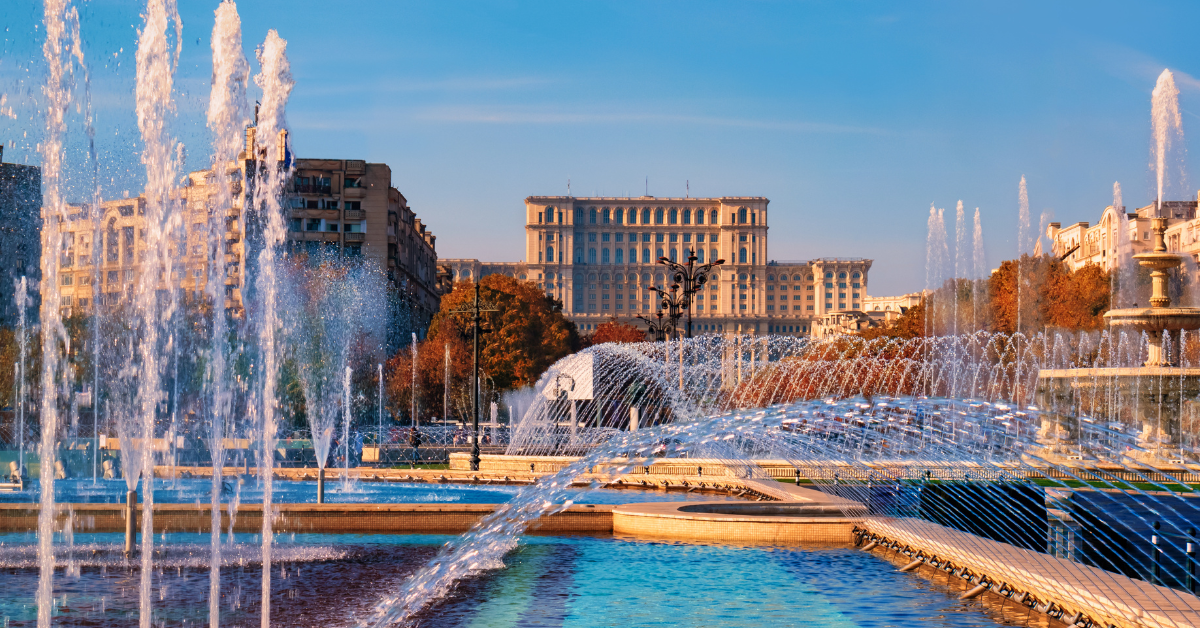
The old town, lined with cobblestone streets and baroque architecture, charms tourists with its historical beauty. In recent years, trendy cafes and modern hotels have appeared, further enhancing the city’s sophistication.
Why Doesn’t Bucharest Have a Kanji Name?
Japanese Orthography Prioritizes Phonetic over Semantic Representation
In Japanese, foreign names are typically represented by how they sound rather than by meaning. In contrast, Chinese might use phonetic Kanji transliterations like “布加勒斯特” for Bucharest. However, this practice is not common in Japanese.
Forcing Kanji onto foreign names can introduce unintended meanings and lead to confusion. Thus, the Katakana representation “ブカレスト” is the most natural and accurate way to express the city name in Japanese.
Bucharest as a Travel Destination
A City Where Food, Architecture, and Arts Intersect
Bucharest is appreciated by travelers for its balance of history, art, and gastronomy. Below is a table of popular Romanian dishes among Japanese tourists:
| Dish | Description | Feature |
|---|---|---|
| Mici (Mititei) | Spicy skinless sausages | Best eaten grilled |
| Sarmale | Cabbage rolls filled with minced meat | Hearty and flavorful |
| Ciorba | Sour soup made with fermented ingredients | Great with sour cream |
| Papanasi | Fried cheese donuts with cream and jam | A popular dessert |
In addition to its cuisine, Bucharest boasts rich cultural venues like the National Theatre and the Romanian Athenaeum, offering ample opportunities to enjoy classical performing arts.
Bucharest and Sports
A City United by Passion for Football
Sports, particularly football, play a significant role in Bucharest’s local culture. The city is home to several professional football clubs, and locals are fervent supporters of their teams.
| Team Name | Home Stadium | Notable Traits |
|---|---|---|
| Steaua Bucharest | Arena Națională | Most national titles, plays in UEFA |
| Dinamo Bucharest | Stadionul Dinamo | Historic club founded by police forces |
More and more tourists are visiting Bucharest specifically for football matches, making sports tourism an emerging aspect of the city’s appeal.
Bucharest’s Transportation Infrastructure
Ease of Access for Tourists
Bucharest has undergone extensive infrastructure development, offering high convenience for visitors. Below is a summary of main transportation options:
| Transport | Description | Notable Features |
|---|---|---|
| Metro | Underground system covering the city | Low congestion, punctual |
| Bus | Inexpensive, extensive routes | Minimal English signage |
| Taxi | Cheap initial fare, app-based services | Use apps for safety and clarity |
| Airport Access | About 40 minutes from city center | Express buses available |
The metro is particularly efficient and allows easy access to both tourist sites and the airport.
Myths and Realities About Bucharest
Correcting Misconceptions About Safety and Modernization
Some Japanese may mistakenly associate Bucharest with danger or underdevelopment. However, in reality, the city is safe and well-developed, especially in its central districts.
| Misconception | Reality |
|---|---|
| The city is dangerous | Well-policed city center is safe |
| It’s not modern | Rapid development after EU accession |
| Few tourist spots | Museums, old town, concert halls abound |
| Lack of information | English signs and guides are available |
As shown, firsthand experience and up-to-date knowledge are crucial to forming an accurate impression of the city.
Conclusion
Bucharest lacks a Kanji name not out of oversight, but because Katakana accurately conveys its phonetics in accordance with Japanese linguistic traditions. In this way, the name itself becomes a direct reflection of the city’s character.
More importantly, what defines Bucharest is not how it is written, but how it is experienced. Through its historic streets, rich cuisine, passionate sports culture, and welcoming people, the city leaves a strong impression on its visitors.
For many Japanese, Bucharest remains an undiscovered gem. By setting aside preconceptions and embracing new perspectives, travelers can uncover the authentic essence of Romania’s capital.