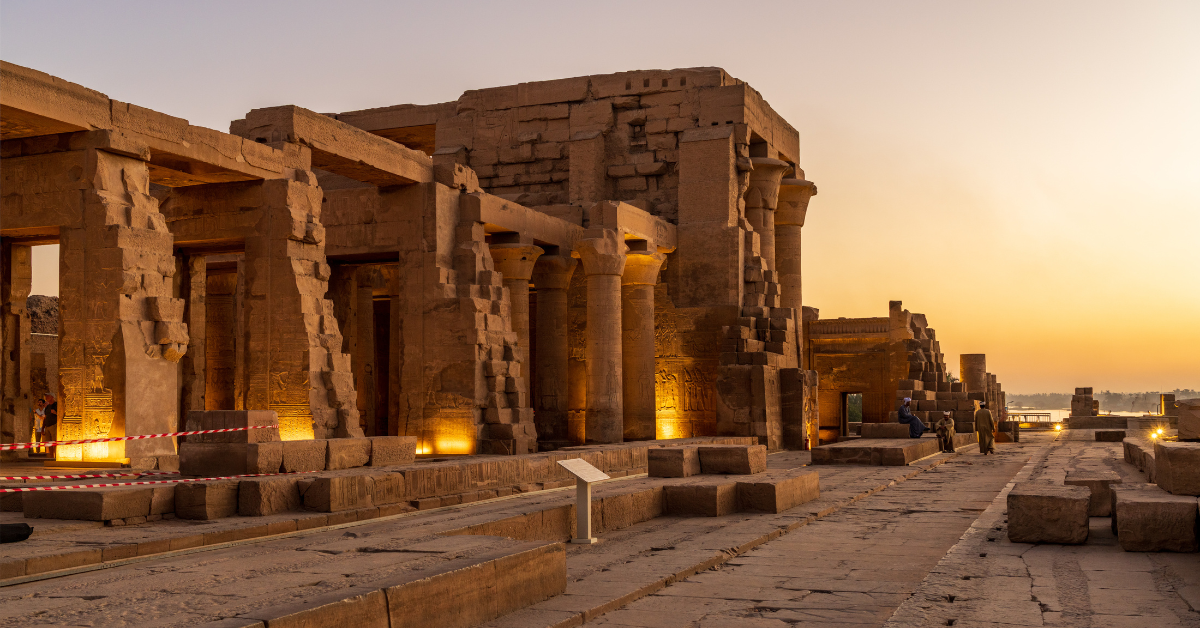


The epic battle against Anubis in JoJo’s Bizarre Adventure Part 3 is one of the most memorable in the series. The real-world setting for this fierce encounter is Kom Ombo Temple, located in Aswan, Egypt. Standing gracefully along the Nile River, this ancient site is not only historically significant but also a must-visit for fans wanting to walk through the world of JoJo. In this article, we explore the temple’s features, its mythological connections, and everything you need to know before visiting this sacred destination.
What is Kom Ombo Temple?
A Temple of Beauty and Mystery Along the Nile
Situated in southern Egypt near the city of Aswan, Kom Ombo Temple is a uniquely structured site built during the Ptolemaic Dynasty. What makes it distinctive is its symmetrical design, created to worship two gods—Horus, the falcon-headed god, and Sobek, the crocodile god. Each side of the temple is perfectly mirrored, featuring separate sanctuaries, corridors, and altars.
Among the temple’s many highlights is a wall relief depicting surgical instruments, providing insight into the advanced medical knowledge of ancient Egypt.
| Item | Details |
|---|---|
| Location | Near Aswan, Egypt |
| Construction | Ptolemaic Dynasty (2nd Century BCE) |
| Deities Worshipped | Horus (Falcon-headed), Sobek (Crocodile) |
| Key Features | Symmetrical Structure, Medical Carvings |
| Opening Hours | Daily from 8:00 to 17:00 (subject to seasons) |
Unlike the more commercialized sites, Kom Ombo offers a serene atmosphere where visitors can truly feel the spiritual weight of history. At sunrise or sunset, the interplay of light and shadow on the columns and carvings creates a breathtaking spectacle.
Battle with Anubis: A Fusion of Anime and Ancient History
A Scene Where Anime and Temple Architecture Converge
In JoJo’s Bizarre Adventure: Stardust Crusaders, the Anubis Stand, possessing a sword, wreaks havoc by taking control of those who wield it. This thrilling storyline unfolds in what appears to be a grand, ancient temple reminiscent of Kom Ombo. The stone pillars and shadowy halls depicted closely resemble the real-world temple’s layout.
| Anime Representation | Real-World Parallels |
|---|---|
| Massive stone columns and corridors | Kom Ombo’s colonnade design |
| River-adjacent battleground | Temple located along the Nile River |
| Confined, mysterious chambers | Dark corridors inside the temple |
| Deity-based supernatural power | Anubis as the Egyptian god of death |
In Egyptian mythology, Anubis is the god who judges souls after death. In the anime, this concept is creatively adapted into a possessed sword that symbolizes the god’s will, blending myth with modern fantasy in a way that resonates with viewers.
Kom Ombo as a Pilgrimage Spot for JoJo Fans
A Guide to Access and Highlights
Though less crowded than Luxor or Giza, Kom Ombo offers a unique, tranquil experience. Accessible via car, tour buses, or even Nile cruises, it presents an ideal getaway for those seeking both cultural immersion and anime pilgrimage.
| Transportation | Duration | Features |
|---|---|---|
| Car (Taxi) | Approx. 1 hr | Flexible timing, scenic river route |
| Tour Bus | Approx. 1.5 hr | Often combined with other historical sites |
| Nile Cruise | Varies | Enjoy the scenery while en route |
Key attractions include the surgical tools relief, the Nileometer, and twin sanctuaries for Horus and Sobek. These features provide deep insight into the religious and scientific advancements of ancient Egypt.
| Highlight | Description |
|---|---|
| Medical Instrument Reliefs | Illustrates advanced ancient surgical knowledge |
| Nileometer | Used to measure water levels for agricultural planning |
| Twin Sanctuaries | Unique dual-deity structure, perfectly symmetrical |
| Crocodile Mummy Exhibit | Preserved mummies honoring Sobek, located nearby |
Egyptian Mythology and JoJo’s Characters: A Deep Connection
The JoJo series frequently incorporates Egyptian deities into its characters and Stand abilities. Gods like Anubis, Horus, and Set each symbolize different aspects of power, judgment, and chaos—mirroring the traits of the characters they inspire.
| Deity | Symbolism | Role in the Series |
|---|---|---|
| Anubis | God of the dead and embalming | Stand possessing a cursed sword |
| Sobek | God of fertility and the Nile | Worshipped at Kom Ombo |
| Horus | Sky god and symbol of kingship | Temple’s left sanctuary |
Understanding these mythological references deepens appreciation for JoJo’s narrative, offering a scholarly angle to the pilgrimage experience.
Conclusion
An Overlap of Fantasy and Reality
Kom Ombo Temple, the symbolic setting of the battle with Anubis, is more than just an archaeological site. For JoJo fans, it’s a living monument to the series’ world-building. For history buffs, it’s a chance to witness firsthand the brilliance of ancient Egyptian civilization.
Walking through the stone corridors with the Nile breeze at your back, one can easily imagine being part of the Stardust Crusaders’ journey. The real and the fictional merge into a surreal experience that stays with you long after your visit.
If you’re traveling to Egypt, make sure Kom Ombo is on your itinerary. The story, the mythology, and the majestic setting combine to create a truly unforgettable destination.