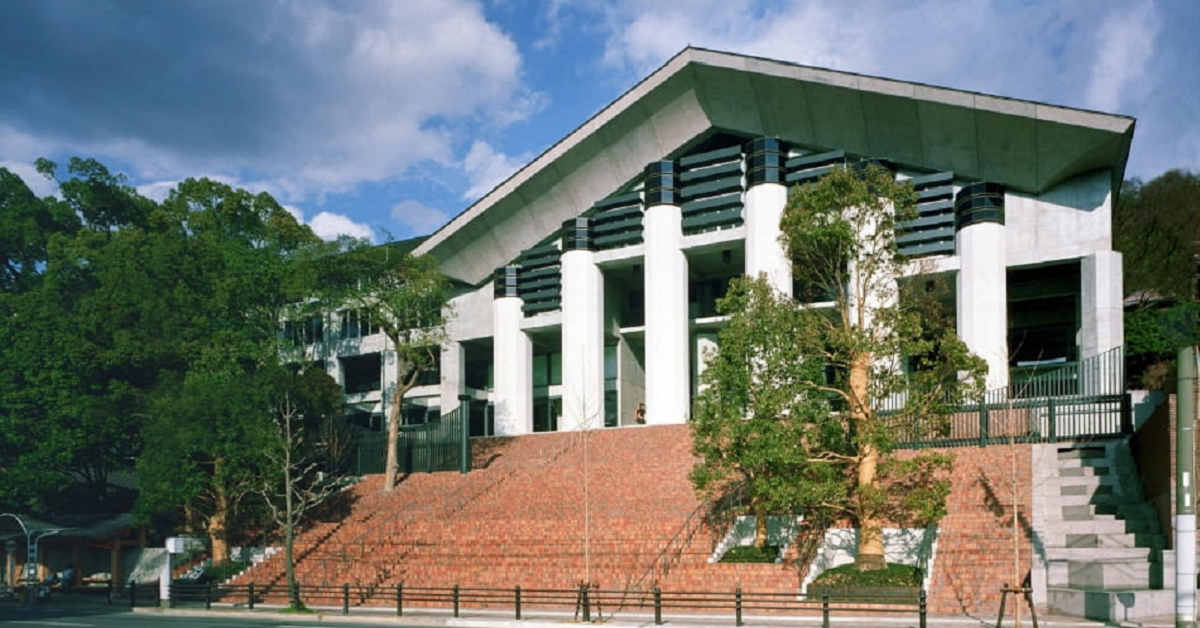


Kyoto University of the Arts served as the filming location for many of the indoor scenes in the movie “Kokuhō.” The backstage corridors, rehearsal rooms, hallways, and plazas within the campus were selected to support the film’s immersive world. This article delves into how each of these spaces contributed to the movie and highlights their visual and thematic significance.
Why Kyoto University of the Arts Was Chosen
The Influence of Architecture and Environment on Visual Aesthetics
When selecting filming locations, it’s not just about the background scenery; the environment forms the core of the story. Kyoto University of the Arts was highly regarded by filmmakers for being a rare site where modern architecture harmonizes with traditional Japanese aesthetics. Its minimalist corridors and rehearsal rooms possess a visual purity that expands cinematic expression.
The campus design flows naturally, and contrasts such as stillness and movement, light and shadow, are seamlessly captured on screen. In the film, these architectural characteristics heightened emotional depth and emphasized the quiet intensity of key scenes.
| Facility Used | Role in the Film |
|---|---|
| Backstage Corridor | Used to depict the protagonist’s inner struggles |
| Rehearsal Room | Symbolized the transmission of traditional artistry |
| Hallway | Stage for chance encounters and emotional tension |
| Plaza | Scene for emotional release and contrast in tone |
The Stillness and Tension of the Backstage Corridor
A Space that Supports Critical Turning Points
This corridor functioned as a powerful emotional space, stirring both visual and auditory senses. Its narrow, elongated structure, undecorated concrete walls, and subdued lighting brought out the solitude and internal conflict of the characters.
Cinematically, long shots capturing a character walking away, shadows stretching behind them, and the echo of footsteps were used to amplify both tension and introspection.
| Physical Feature of Corridor | Cinematic Impact |
|---|---|
| Narrow, elongated path | Builds suspense through long takes |
| Minimal lighting | Enhances contrast, emphasizes inner conflict |
| Curved layout | Symbolizes uncertainty and emotional turmoil |
Authentic Atmosphere and Energy in the Rehearsal Room
A Place for Traditional Expression and Physical Presence
The rehearsal room represented the dual themes of “artistic inheritance” and “personal growth.” Tatami floors, wooden beams, and soft natural light through shoji screens provided an atmosphere that felt steeped in cultural heritage.
Here, the characters’ determination, anxiety, and breakthroughs were depicted in detail. The use of mirrors and calligraphy scrolls also deepened the symbolic layering of the scenes.
| Feature of Rehearsal Room | Role in Cinematic Expression |
|---|---|
| Tatami and wooden elements | Emphasize spiritual and physical depth |
| Mirrors and natural light | Represent introspection and internal conflict |
| Echoing sounds | Add realism and emotional intensity |
Hallways and Plazas Portraying Human Relationships
Moments of Daily Life as Story Catalysts
The hallways and plazas served as narrative spaces where ordinary settings gave rise to extraordinary interactions. The long, linear hallways became stages for silent tension and brief encounters, while the open-air plazas created emotional contrast and a sense of release.
Through the use of deliberate spatial framing, the film invited viewers to observe rather than be told, leaving room for personal interpretation.
| Space Type | Represented Theme |
|---|---|
| Long hallway | Emotional distance, chance meetings |
| Campus plaza | Relief, warmth, connection to daily life |
| Architecture + nature | Coexistence of human activity and culture |
Kyoto University of the Arts as a Filming Location
Cultural Significance and Artistic Potential of an Educational Facility
Kyoto University of the Arts functions not only as a place of learning but also as a hub for cultural production and artistic exchange. Its flexibility in offering diverse indoor and outdoor spaces, combined with practical amenities for filming, makes it a prime location for professionals.
Filmmakers praised the school’s cooperation, the ease of logistical setup, and its high-quality infrastructure, from lighting to equipment transport. Its potential as a versatile filming site continues to grow.
| Evaluation Point | From a Filmmaker’s Perspective |
|---|---|
| Spatial versatility | Adaptable for various genres and formats |
| Cooperative support | Smooth collaboration with university staff |
| Filming infrastructure | Excellent lighting, access, and acoustic control |
Conclusion
The film “Kokuhō” drew heavily on the richness of Kyoto University of the Arts’ architecture and environment, enabling a detailed portrayal of characters’ inner lives and transformations. Each location—the backstage corridor, rehearsal space, hallway, and plaza—functioned not merely as settings, but as silent narrators enhancing the emotional depth of the film.
By integrating space and story, the movie transcended traditional visual storytelling, offering an immersive experience where architecture becomes part of the narrative. Kyoto University of the Arts stands poised to become an ever-more essential space for future artistic creations.