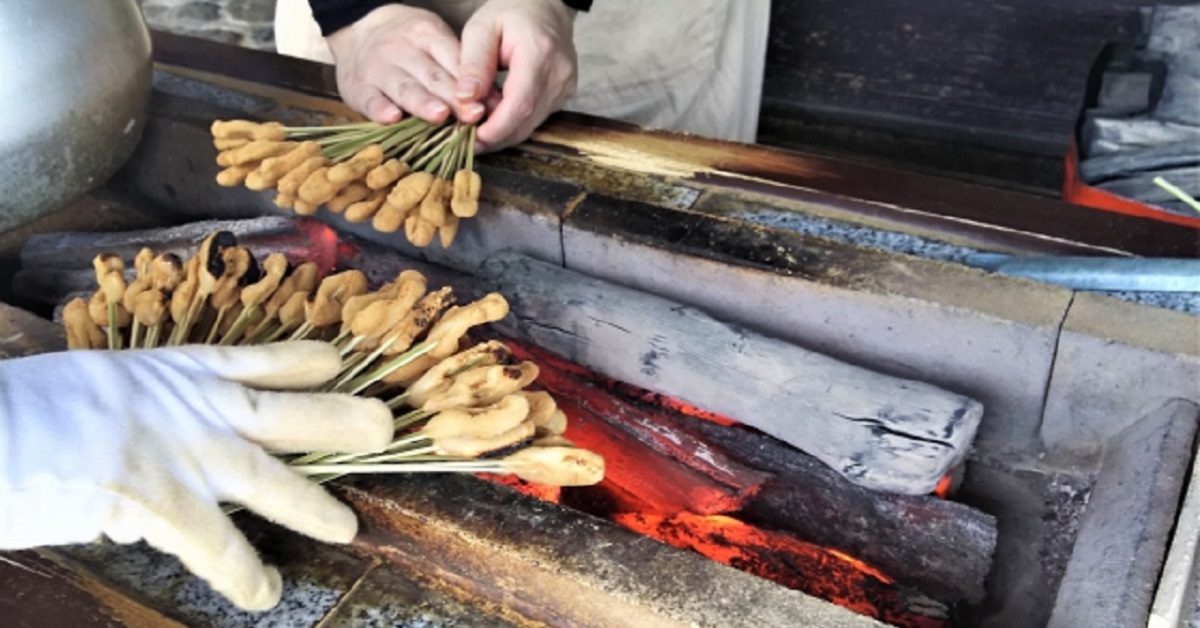


The historical shops Ichimonjiya Wasuke and Kazariya, located along the approach to Kyoto’s Imamiya Shrine, served as key locations in the movie KOKUHO. The very stone path walked by Kikuo and his companions is still preserved today. With the fragrant air of grilled mochi and traditional wooden architecture, this site has become a must-visit destination for fans of the film. It was also known as a resting spot for the cast and crew during filming, making it a unique blend of cinema and Kyoto culture.
- Two Historic Aburi-mochi Shops Facing Each Other at Imamiya Shrine
- Realism and Atmosphere in the Film KOKUHO
- Aburi-mochi Tasting: A Tradition with Subtle Variations
- Etiquette for Pilgrimage Visitors
- Tips for Fully Enjoying Aburi-mochi
- The Timeless Stone Path and Emotional Connection
- Changing Seasonal Scenery and Reasons to Return
- Conclusion
Two Historic Aburi-mochi Shops Facing Each Other at Imamiya Shrine
Kyoto’s Imamiya Shrine features a serene approach where Ichimonjiya Wasuke and Kazariya, two shops specializing in aburi-mochi (grilled rice cake), face each other across the stone path. Ichimonjiya Wasuke, established over 1,000 years ago, is one of Japan’s oldest confectionery shops. Meanwhile, Kazariya, with a 400-year history, is beloved for its lighter, more delicate flavor.
| Shop Name | Founded | Signature Features | Atmosphere | Hours |
|---|---|---|---|---|
| Ichimonjiya Wasuke | About 1,000 years | Rich, smoky flavor with deep history | Traditional and solemn | 10:00–17:00 |
| Kazariya | About 400 years | Light and subtle sweetness | Bright and welcoming | 10:00–17:00 |
The stone path connecting the two shops was featured in the movie KOKUHO, making it a site where fans can walk through the very scenes portrayed in the film.
Realism and Atmosphere in the Film KOKUHO
In KOKUHO, the approach to Imamiya Shrine and the stone path played a vital role in setting the tone of several key scenes. As Kikuo and others walk along the path, the reflections on the stones and the drifting scent of grilled mochi deepen the film’s atmosphere.
It is said that cast members and staff often took breaks at these locations during filming, enjoying the aburi-mochi and the tranquil setting. Visiting this place offers a powerful sense of stepping directly into the world of the film.
Aburi-mochi Tasting: A Tradition with Subtle Variations
Aburi-mochi, a Kyoto specialty, consists of small rice cakes grilled over charcoal and coated with a white miso-based sweet sauce. Both shops offer the same dish, but with noticeable differences in taste and texture that make comparing them enjoyable.
| Comparison | Ichimonjiya Wasuke | Kazariya |
|---|---|---|
| Grilling | Firm and richly charred | Softer and lighter |
| Sauce | Deep and flavorful | Mild and elegant |
| Serving | About 13–15 skewers per plate | About 13–15 skewers per plate |
| Atmosphere | Deep historical aura | Friendly and casual |
Trying both shops and comparing their unique qualities is a central part of the pilgrimage experience.
Etiquette for Pilgrimage Visitors
While visiting filming locations is popular, it’s also important to respect the cultural and historical context of the area. The Imamiya Shrine approach is a tranquil place, and all visitors should uphold proper manners.
| Etiquette Item | Description |
|---|---|
| Photography | Be considerate of others; ask before shooting |
| Conversation Volume | Keep voices low and respectful |
| Queue Behavior | Wait in line quietly and take turns |
| Eating | Meals must be consumed on-site; no takeout available |
Respecting local customs enhances the experience for everyone and shows appreciation for the film and the community.
Tips for Fully Enjoying Aburi-mochi
To elevate the experience, consider the following tips for tasting aburi-mochi at its best:
| Tip | Details |
|---|---|
| Freshly Grilled | The flavor is at its peak when served hot |
| Pairing | Enjoy it with the house tea served at the shop |
| Photos | Take a few photos at the start, then focus on tasting |
| Visit Both | If possible, visit both shops in one trip, especially in the morning |
The experience becomes more memorable when approached with mindfulness and appreciation.
The Timeless Stone Path and Emotional Connection
The stone path shown in KOKUHO still exists exactly as seen in the film. Its worn surface and the soft curves shaped by centuries of footsteps tell stories of the past. Standing where Kikuo may have stood, seeing what he saw, is an emotional moment for many fans.
The physical act of walking the same path brings the film’s scenes vividly back to life, allowing for a deeper connection than watching alone can offer.
Changing Seasonal Scenery and Reasons to Return
Each season offers a different view of this beautiful site. The ambiance transforms with nature, adding to its charm and deepening the cinematic connection.
| Season | Highlight |
|---|---|
| Spring | Cherry blossoms softly coloring the path |
| Summer | Cool shade and the gentle sound of wind chimes |
| Autumn | A carpet of red and gold leaves across the stones |
| Winter | Silent snowfall amplifying the warmth of the shops |
The seasonal changes provide ample reasons to revisit and rediscover the experience anew.
Conclusion
The filming locations of KOKUHO—Ichimonjiya Wasuke, Kazariya, and the stone path between them—are not just settings, but places where Kyoto’s long-standing traditions and cinema converge. These aren’t merely backdrops but spaces filled with emotion, history, and sensory depth.
Whether you are a film enthusiast or a traveler seeking Kyoto’s essence, this pilgrimage offers a rich, multilayered journey. The warmth of aburi-mochi, the touch of stone underfoot, and the stillness of the shrine’s approach await those who visit.