

Located in eastern Germany, Leipzig is celebrated as a city where music, culture, and intellectual spirit merge harmoniously.
The old Chinese transcription “莱府” is not just a phonetic rendering, but a symbol of cross-cultural connection.
For many Japanese, Leipzig represents a place where serenity, intelligence, and art coexist in perfect balance.
The Evolution of the Name “Leipzig”
Why Katakana Became the Standard Form
The German name “Leipzig” has proven difficult to render accurately in Japanese phonetics. Variants such as “ライプツィヒ,” “ライプチヒ,” and “ライプチッヒ” appeared in different eras.
From the Meiji to early Shōwa periods, there was no unified system for writing foreign names, so several versions coexisted. Today, “ライプツィヒ” (Raiputsuihi) has been officially adopted by Japanese government and media sources as the standard representation.
The Historical Transcription “莱府”
The kanji form “莱府” was an old Chinese phonetic transcription used from the late Qing dynasty to the early Republic of China. “莱” represented the sound “Lai,” and “府” was a common suffix for city names.
Although rarely used in Japan, the transcription appeared in some prewar maps and academic works. This attempt to express foreign place names in kanji reflects the intellectual curiosity and cultural exchange of the time.
| Type | Example | Period | Notes |
|---|---|---|---|
| Standard Japanese | ライプツィヒ | Modern era | Widely used in Japan |
| Historical variant | ライプチヒ / ライプチッヒ | Meiji–early Shōwa | Phonetic experimentation |
| Chinese transcription | 莱府 | Late Qing–Republic period | Transliteration of foreign city names |
The Musical Soul of Leipzig
A Legacy Built by Great Composers
Leipzig is celebrated as the city where Johann Sebastian Bach devoted his life to sacred music.
Felix Mendelssohn led the Gewandhaus Orchestra, the world’s oldest civic symphony, while Robert and Clara Schumann, as well as Johannes Brahms, contributed greatly to the Romantic music movement from this very city.
| Composer | Place of Activity | Main Contribution |
|---|---|---|
| J. S. Bach | St. Thomas Church | Church music and cantatas |
| F. Mendelssohn | Gewandhaus Orchestra | Conducting and founding the Conservatory |
| R. & C. Schumann | Leipzig Conservatory | Development of Romanticism in music |
Music as a Way of Life
In Leipzig, music is woven into everyday life. The St. Thomas Boys Choir, established during Bach’s time, still performs regularly.
The Gewandhaus Orchestra’s concerts attract audiences of all ages, and the city’s citizens view music not merely as entertainment but as an essential part of life and identity.
How the Japanese View Leipzig
Harmony of Serenity and Intellect
Japanese visitors often describe Leipzig as “a calm and intellectual city.”
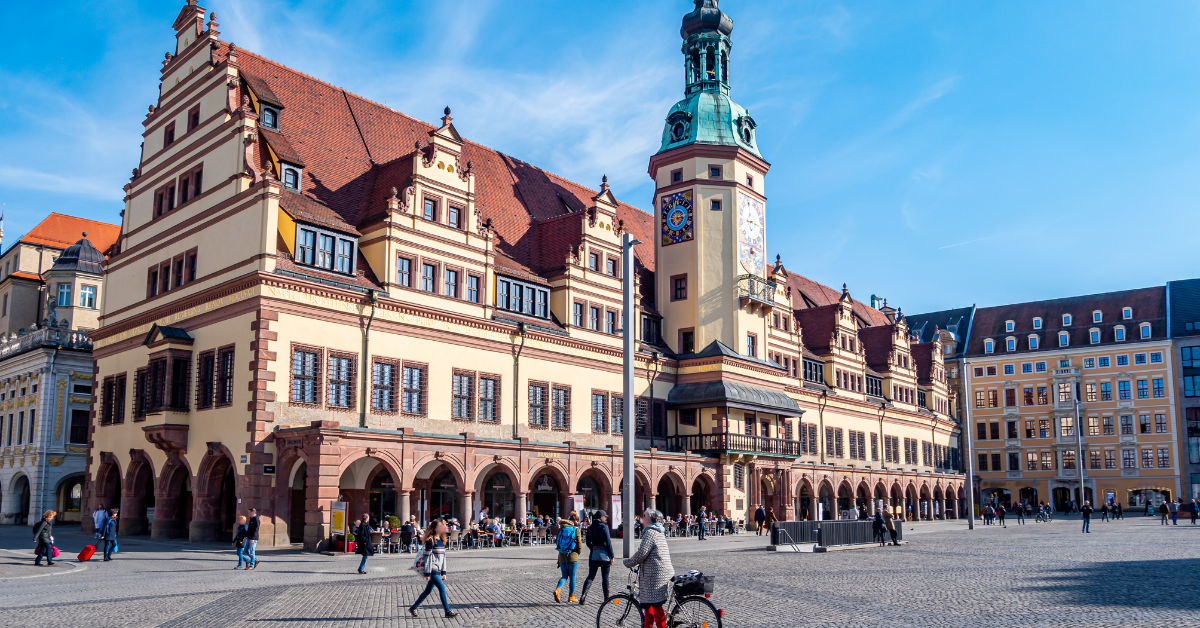
Unlike the bustling atmospheres of Berlin or Munich, Leipzig exudes a sense of quiet dignity and artistry. The cobblestone streets lined with historical architecture invite reflection, and the stillness of the city resonates with the Japanese sense of “ma,” or meaningful silence.
Influence on Japanese Music Education
During the Meiji era, the Leipzig Conservatory became a key destination for Japanese musicians studying Western music.
Composers such as Taki Rentarō and Yamada Kōsaku brought back the theories of German Romanticism, forming the foundation of Japan’s modern music education.
The integration of discipline and sensitivity in Japanese classical training today can be traced directly to the Leipzig school of musical philosophy.
| Period | Japanese Musician | Studies in Leipzig | Influence in Japan |
|---|---|---|---|
| Mid-Meiji | Taki Rentarō | Western harmony and composition | Basis for modern music education |
| Early Taishō | Yamada Kōsaku | Orchestration and conducting | Growth of Japanese symphonic tradition |
| Early Shōwa | Ryoichi Hattori and others | Music theory and arrangement | Theoretical influence on popular music |
Leipzig as a Sports City
The New Energy of RB Leipzig
Beyond music, Leipzig is also a powerhouse of sports in Germany.
The Bundesliga team RB Leipzig has rapidly risen to prominence with its youth development system and dynamic attacking play.
On match days, the city becomes a sea of red and white, and fans unite in passionate support, embodying a modern sense of community pride.
Sports and Social Integration
Leipzig also hosts numerous athletic events, including marathons and track-and-field competitions.
As one of the birthplaces of the German gymnastics movement (Turnverein), the city continues to promote physical education and community health.
Sports here are more than competition—they are a cultural bridge connecting generations.
| Sport | Feature | Venue |
|---|---|---|
| Football | RB Leipzig, a top Bundesliga club | Red Bull Arena |
| Track & Field | City marathons and international events | Leipzig Marathon Course |
| Gymnastics & Swimming | Longstanding school sports tradition | Leipzig Sports Park |
A Modern and Sustainable Leipzig
Where Art Meets Technology
The former industrial area Spinnerei has been reborn as a creative district filled with galleries, studios, and cafes.
It is now recognized as a hub for young artists and digital creators, earning Leipzig the title “Creative Capital of Eastern Germany.”
The city’s openness to new media and film production has attracted global attention from art and technology communities alike.
Balancing Environment and Culture
Leipzig is a pioneer in eco-friendly urban development.
With extensive cycling routes, trams powered by renewable energy, and abundant green spaces, the city seamlessly integrates environmental awareness into daily life.
Residents enjoy outdoor sports and leisure by the lakes and parks, embodying the city’s philosophy of “living with nature while nurturing culture.”
| Urban Aspect | Key Feature | International Recognition |
|---|---|---|
| Environmental Policy | Expansion of renewable energy use | Ranked among Europe’s greenest cities |
| Cultural Innovation | Integration of art and technology | Candidate for European Capital of Culture |
| Quality of Life | Harmony between culture, sports, and nature | Ranked as one of Germany’s most livable cities |
Conclusion
Although Leipzig does not have an official kanji name, the old transcription “莱府” carries a symbolic meaning—it represents cross-cultural understanding and international connection.
As a city where music, sports, art, and sustainability coexist, Leipzig continues to evolve while preserving its traditions.
For Japanese people, Leipzig evokes a sense of calm intelligence and passionate creativity—a city that teaches the joy of living through culture.
Today, Leipzig stands as a “city where culture breathes and people shine,” inspiring the world through its harmony of past and future.