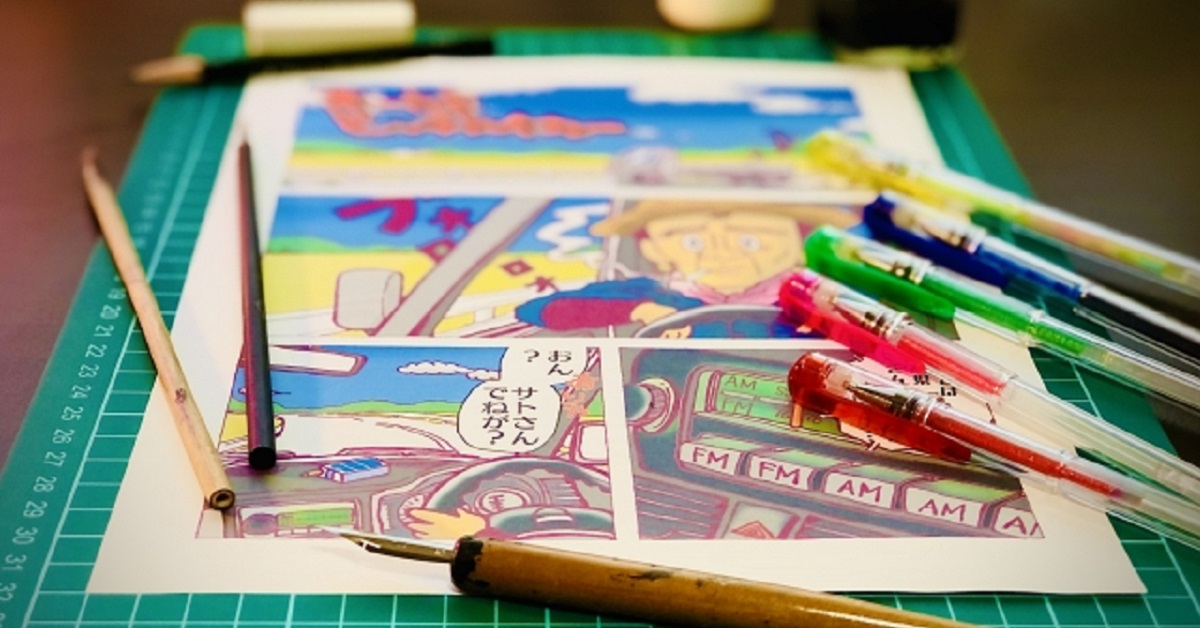


A Manga-ka is more than just a comic artist. In Japan, they are seen as cultural storytellers, weaving together art and narrative to produce globally beloved works. This article explores the role, work style, and global recognition of manga-ka in a format easy for international readers to understand.
Basic Meaning of a Manga‑ka
Who a Manga‑ka is
A Manga‑ka refers to a person whose profession is drawing Japanese manga. The Japanese term 「漫画家」 is used for this specialist who combines drawings and storytelling to create work. In English speaking contexts, terms like “comic artist” or “manga artist” may be used, but the Japanese word “Manga‑ka” has become widely adopted to respect the distinctive Japanese style and culture of manga.
The fact that this term is used unchanged overseas shows how globally recognized and respected Japanese manga culture has become. Especially when linked with animation, the work and names of Manga‑ka have become known to fans all around the world. Manga‑ka vary widely in their artistic approaches—from realism to dramatized stylization—and each brings a unique voice to the medium.
The Work of a Manga‑ka
From concept to publication
The work of a manga‑ka spans many different tasks. A typical process may go like this:
| Step | Content |
|---|---|
| Plot creation | Developing the story outline and characters’ goals |
| Name (layout) creation | Rough draft with panel layout and dialogue |
| Drawing/Artwork | Inking, backgrounds, effects lines |
| Finishing | Applying toning, digital processing to polish the piece |
| Proofing & Revisions | Working with editors, checking and improving |
In this way, a manga‑ka is not just someone who draws: they conceive the story, craft the structure, and bring it to completion as a unified creative work. Furthermore, manga are visual narratives that transcend language, conveying emotions through facial expressions, composition, and timing.
Working Styles and Formats of a Manga‑ka
Differences between magazine serialisation and web serialisation
Manga‑ka work can primarily be classified into two formats: the traditional magazine serialisation and the increasingly common web serialisation.
| Item | Magazine Serialisation | Web Serialisation |
|---|---|---|
| Publication medium | Weekly or monthly printed magazines | Manga apps, social media platforms (digital) |
| Schedule | Fixed deadlines (weekly, monthly issues) | More flexible, depending on platform and creator |
| Drawing method | Often a mix of hand‑drawn and digital | Mainly digital |
| Reader demographic | Subscribers to manga magazines | Smartphone users and younger audience |
While magazine serialisation remains the traditional path and has launched many famous Manga‑ka, web serialisation is now recognized as a major route for discovering new talent. Web‑based manga often adopt full‑colour pages or vertical scroll formats, making it easier to engage with global readers.
Income and Lifestyle of a Manga‑ka
More than just manuscript fees
A manga‑ka’s income is derived from multiple sources:
| Income type | Content |
|---|---|
| Manuscript fee | Payment for publishing chapters in a magazine or app |
| Volume royalty | A share of revenues when volumes are sold |
| Merchandising & licensing | Revenue share from character goods or collaborations |
| Animation/adaptation income | Fees from anime adaptations or other media transformations |
| Overseas contracts | Earnings from translated editions and international licensing |
Although a well‑known manga‑ka can earn a diverse set of income, new creators often face financial instability. Some manga‑ka maintain a side job until their work becomes established. Additionally, models such as crowdfunding and direct digital publishing are increasingly used as alternative revenue streams.
| Element | Print Media | Digital Media |
|---|---|---|
| Tools used | Original paper, G‑pen, ink | Tablet, pen‑graphic device, drawing software |
| Correction method | Manual correction with white ink | Undoable edits, layer‑based digital corrections |
| Storage method | Physical original artwork | Data storage in cloud or digital archive |
| Final result | Hand‑drawn texture and uniqueness | Easy sharing, rich colour and motion representation |
Both methods have their own appeal and strengths; recently many Manga‑ka adopt a hybrid approach, combining hand‑drawn and digital techniques.
Famous Manga‑ka and Their Works
| Manga‑ka | Representative Work |
|---|---|
| Akira Toriyama | Dragon Ball, Dr. Slump |
| Eiichirō Oda | ONE PIECE |
| Takeshi Inoue | Slam Dunk, Real |
| Hirohiko Araki | JoJo’s Bizarre Adventure |
| Rumiko Takahashi | Inuyasha, Ranma ½, Maison Ikkoku |
These creators are read worldwide, and the title “Manga‑ka” is proudly associated with their work. Their styles, stories, and characters have achieved global influence.
How to Become a Manga‑ka
Steps to aim for professional status
Although there is no formal qualification required to become a manga‑ka, many aspiring creators follow certain paths:
| Route | Feature |
|---|---|
| Award entry | Submit to publisher‑run contests and earn a debut opportunity |
| Social media / web posting | Publish one’s own manga, build a fan‑base, then attract publisher interest |
| Doujin (self‑publishing) | Present work at events, gain experience and exposure |
| Art school / specialised study | Learn drawing and storytelling techniques at college or school |
Regardless of the route taken, the key elements are consistent creation and public presentation. Passion for the craft and strong expression skills open the door to professional success. Networking with editors, collecting feedback, and perseverance play a central role in making the jump from amateur to professional.
Conclusion
Manga‑ka as a symbol of creation and culture
A Manga‑ka is far more than someone who draws comics: they are the creators of narrative‑driven art that sits at the heart of Japanese culture and is embraced worldwide. Through their work, they offer not only entertainment but also reflections on society, personal growth, identity, and more. Today, the term “Manga‑ka” has become a title of respect across borders.
As technology advances and globalization deepens, the working styles and creative methods of manga‑ka continue to evolve. Future manga‑ka will harness new tools, reach global audiences directly, and shape storytelling in unexpected ways. For anyone curious about Japanese culture or the world of comics, understanding the role of a manga‑ka offers an insightful window into an art form that transcends language and geography.