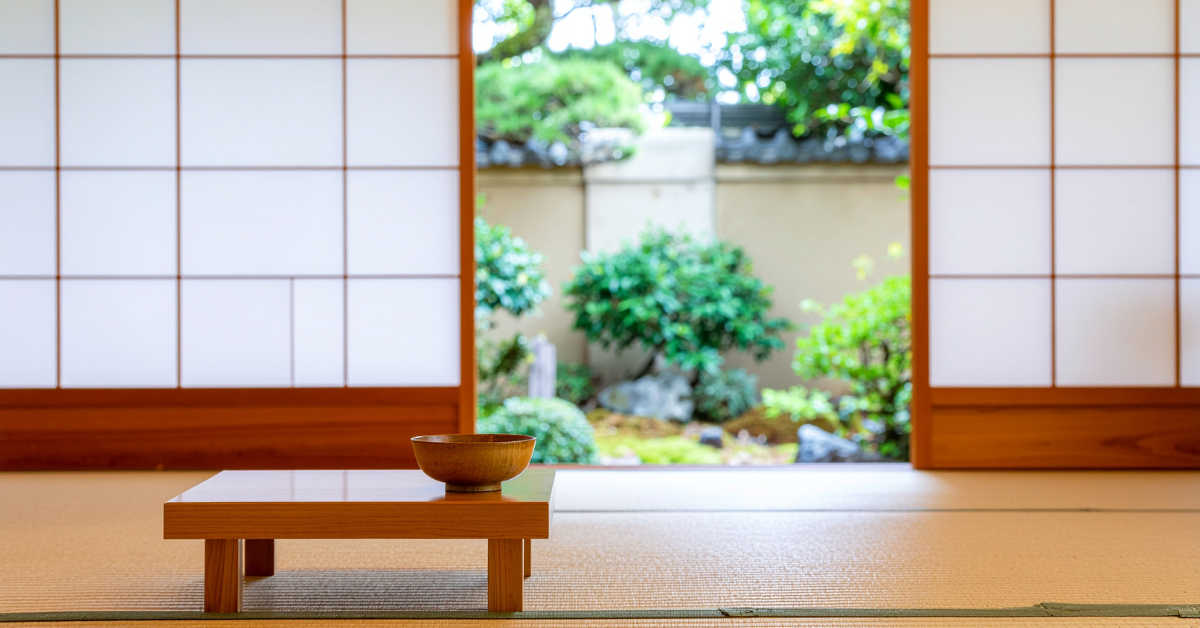


Shoji is an essential feature of traditional Japanese rooms, providing a soft division of space while letting in natural light. This article explains the structure, functions, differences from fusuma, and how Shoji is used in modern homes in a way that’s easy for international readers to understand.
What is Shoji?
In Japanese architecture, Shoji is more than just a room divider. It consists of a wooden lattice frame covered with thin washi paper, allowing it to obscure the view while softly diffusing light into the room. The light passing through Shoji changes subtly depending on the time of day and season, adding depth and tranquility to the space. This visual quality gives daily life a quiet elegance.
Shoji also contributes to the room’s humidity control and ventilation. Washi paper, with its fine air permeability, allows for natural airflow while also providing insulation. In this sense, Shoji is not just decorative, but a practical architectural element suited to Japan’s climate.
This age-old fixture symbolizes the wisdom of daily living, combining visual beauty and practical function. In recent years, Shoji has also found a place in modern architecture and international homes, gaining renewed attention for its versatile design and functionality.
Differences Between Shoji and Fusuma
Shoji is often compared to fusuma, another traditional Japanese sliding panel, but there are clear distinctions. Shoji uses translucent paper to allow light into the room while creating partitions. Fusuma, on the other hand, uses thick paper or fabric that completely blocks light, serving as full partitions and providing privacy.
Fusuma is typically used when a higher level of privacy is required, such as in bedrooms or enclosed rooms. In Japanese homes, Shoji and fusuma are often used together to create flexible living spaces.
| Comparison Item | Shoji | Fusuma |
|---|---|---|
| Material | Wooden frame + washi | Wooden frame + thick paper/fabric |
| Light transmission | Yes | No |
| Primary use | Lighting + partition | Full partition |
| Impression | Bright and soft | Calm and enclosed |
They are used according to specific purposes, as shown below:
| Usage Scenario | Recommended Door Type |
|---|---|
| Want to keep it bright | Shoji |
| Nighttime light blocking | Fusuma |
| Need for privacy | Fusuma |
| Japanese-style accent | Shoji |
Shoji in Modern Homes
Even in today’s predominantly Western-style architecture, many households and facilities in Japan still incorporate Shoji. Particularly in living rooms or bedrooms where people want a touch of Japanese design, Shoji serves as a refined interior element. Installed on the inside of windows, they let in gentle light, offering a peaceful alternative to blinds or curtains.
| Advantage | Description |
|---|---|
| Soft natural lighting | Diffuses sunlight without harsh glare |
| Spatial unity | Creates openness when slid open |
| Energy efficiency | Washi provides insulation and humidity control |
| Visual accent | Adds rhythm and personality to a space |
Modern Shoji often uses synthetic washi or polypropylene materials, making them more durable and low-maintenance. This allows families with children or pets to enjoy the beauty of Shoji without worry. Various frame colors and lattice patterns have also emerged, allowing Shoji to blend seamlessly into contemporary interiors.
Shoji is also gaining popularity overseas, known simply as “Shoji.” It is used in modern architecture, hotels, spas, and restaurants where a Japanese aesthetic is desired. The serene light and tranquil atmosphere created by Shoji are appreciated across cultures.
Promoting Shoji to International Audiences
Shoji is not only visually stunning but also highly functional. When introducing it abroad, it is helpful to highlight that it embodies Japanese principles such as minimalism and the appreciation of stillness.
Minimalist Design and Harmony
One of Shoji’s defining characteristics is its simple, understated beauty. The rhythmic pattern of the lattice and the texture of washi combine to create an atmosphere that pairs naturally with minimalist interiors.
In architecture that emphasizes light and shadow, Shoji enhances the depth and poetic ambiance of a space. This unique quality has made it popular among architects and interior designers worldwide.
Natural Materials and Ecology
Shoji is also attracting attention as a sustainable architectural feature that respects the environment. Materials like wood and washi are renewable, and their selection minimizes environmental impact.
| Eco-Friendly Benefits | Description |
|---|---|
| Use of renewable materials | Incorporates natural elements like wood and washi |
| High insulation and humidity control | Helps reduce energy consumption |
| Low waste disposal impact | Breaks down naturally compared to plastics |
| Balance of culture and eco-consciousness | Appeals to those valuing both aesthetics and sustainability |
Shoji’s ability to control natural energy makes it ideal for eco-conscious lifestyles. In summer, it softens harsh sunlight, and in winter, it retains warmth, enhancing energy efficiency and comfort.
Conclusion
Shoji is deeply rooted in Japanese culture, and its functional and aesthetic value has been gaining recognition worldwide. It harmonizes light and space, enriching interiors with a sense of calm and refinement.
Beyond traditional Japanese rooms, Shoji integrates beautifully into modern and Western spaces. From its visual serenity to environmental friendliness and ease of use, Shoji represents a design that aligns with the values of our times.
| Summary of Shoji’s Value | Description |
|---|---|
| Visual Appeal | Soft lighting and elegant spatial design |
| Functionality | Combines ventilation, insulation, and ease of use |
| Cultural Significance | Symbol of Japanese aesthetics and everyday wisdom |
| Global Recognition | Appreciated in architecture and design worldwide |
Though commonplace in Japan, Shoji offers a refreshing and charming experience to international eyes. Recognizing its cultural and practical value and sharing it globally can help convey the beauty of Japanese lifestyle and design to the world.