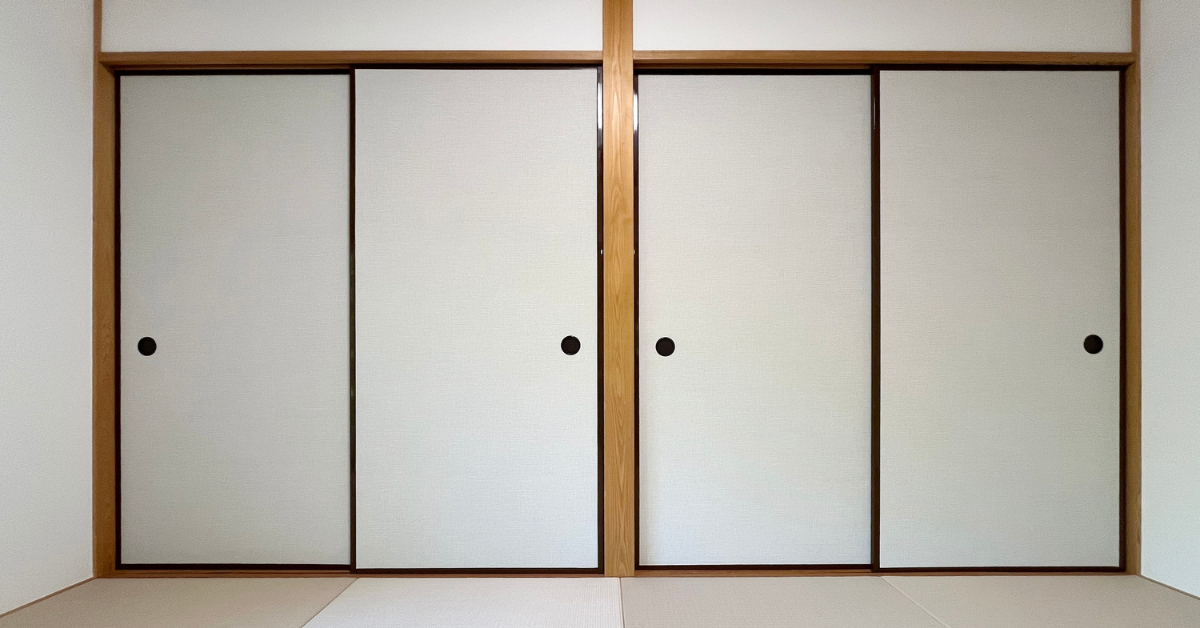


Fusuma, a hallmark of Japanese living spaces, is more than just a room divider. Beyond its functional role, it also contributes to artistic ambiance and spatial aesthetics. This article offers a detailed overview of Fusuma—from its features and structure to its historical context and modern applications. It’s an ideal read for anyone interested in Japanese culture or architectural beauty.
What is Fusuma? A Key Element in Japanese-Style Rooms
Definition and Characteristics of Fusuma
Fusuma are sliding doors used to divide rooms in traditional Japanese houses. They consist of a wooden frame covered with thick paper or cloth, often decorated on the surface. While easy to open and close, they effectively separate living spaces.
| Category | Fusuma | Shōji |
|---|---|---|
| Light | Blocks light completely | Allows natural light through |
| Purpose | Dividing private spaces | Letting in daylight |
| Materials | Wood frame, cardboard, paper, cloth | Wood frame, Japanese paper |
Unlike Shōji, which lets light pass through, Fusuma offers privacy and tranquility by completely blocking external light.
The History and Development of Fusuma
How Fusuma Evolved Over Time
The history of Fusuma traces back to the Nara period, where they were initially used as simple partitions. In the Heian period, Fusuma began appearing in aristocratic homes, featuring decorative fabrics and artistic paper.
| Era | Features of Fusuma |
|---|---|
| Nara | Basic partition, minimal decoration |
| Heian | Used in palaces, richly decorated |
| Muromachi | Introduction of fusuma-e (fusuma paintings) |
| Edo | Widely adopted in homes, blend of function and style |
Today, Fusuma are appreciated for their versatility in spatial design and are often adapted to modern architectural settings.
Structure and Materials of Fusuma
Craftsmanship Behind Japanese Sliding Doors
Although Fusuma may look simple at first glance, they are composed of multiple parts, each contributing to their functionality and beauty.
| Component | Role |
|---|---|
| Frame | Wooden or resin structure that supports the shape |
| Core | Made of cardboard, wood, or foam—provides strength and lightness |
| Surface | Paper or cloth that defines the appearance and mood |
| Pull ring | Functional and decorative element for opening |
Fusuma can be re-covered based on the season or occasion, allowing for flexible interior styling.
The Role of Fusuma in Spatial Design
A Sliding Partition That Transforms Rooms
Fusuma is more than a divider—it serves multiple purposes in Japanese interiors.
| Function | Description |
|---|---|
| Room flexibility | Can be removed to create open space or added for privacy |
| Seasonal adaptation | Change surface design to reflect the season |
| Visual impact | Color and pattern influence the atmosphere of the room |
Especially in tea rooms and inns, Fusuma plays a crucial role in creating dynamic, adaptable environments.
Harmony Between Fusuma and Shōji
Balancing Functionality and Aesthetics
By combining Fusuma and Shōji, Japanese homes achieve a balance between natural light and privacy. During the day, sunlight filters through the Shōji; at night, Fusuma closes off the space for a calm and intimate atmosphere.
Their coordinated designs also create visual rhythm, enhancing the depth and richness of a room. This practice reflects the Japanese architectural philosophy of harmony and adaptability.
Modern-Day Appreciation of Fusuma
Reinventing Tradition for Contemporary Interiors
In recent years, Fusuma has found new relevance in both residential and commercial settings.
- Used in modern homes to add a touch of traditional elegance
- Featured in cafes and inns for a unique Japanese ambiance
- Repurposed in DIY projects for storage or partitions
Designs now include geometric patterns and abstract art, appealing to a younger generation and expanding the visual vocabulary of Fusuma.
Fusuma from a Global Perspective
A Unique Cultural Experience for International Audiences
To foreigners, Fusuma embodies Japanese aesthetics and lifestyle in a tangible form.
| Point of Attraction | Explanation |
|---|---|
| Aesthetic value | Visual appeal through texture, pattern, and form |
| Sound dampening | Quiet sliding action helps maintain a peaceful environment |
| Spatial flexibility | Can instantly change room layouts with minimal effort |
Fusuma is being introduced in overseas hotels and exhibitions, symbolizing a gateway into Japanese culture.
Conclusion
Fusuma is a unique fixture that reflects Japan’s rich traditions, practical sensibilities, and artistic spirit. Its long-standing presence in Japanese homes is a testament to its timeless functionality and elegance.
As more people seek harmony between tradition and modernity, Fusuma is poised to play a key role in future spatial design, offering both beauty and adaptability across cultures.