

Located in northern Italy, the city of Parma offers a wide range of appeal—from its history and arts to cuisine and sports. However, when it comes to expressing the name “Parma” in Japanese, there’s no clear answer. This article explores the presence (or absence) of kanji representations, the origin of the name, cultural background, how Japanese people perceive it, and how sports have enhanced awareness of the city.
Overview and Historical Background of Parma
Parma (Parma) is a historic city in Italy’s Emilia-Romagna region, founded in 183 BC as a Roman colony. It later served as the capital of the Duchy of Parma, playing a significant political and military role through the centuries.
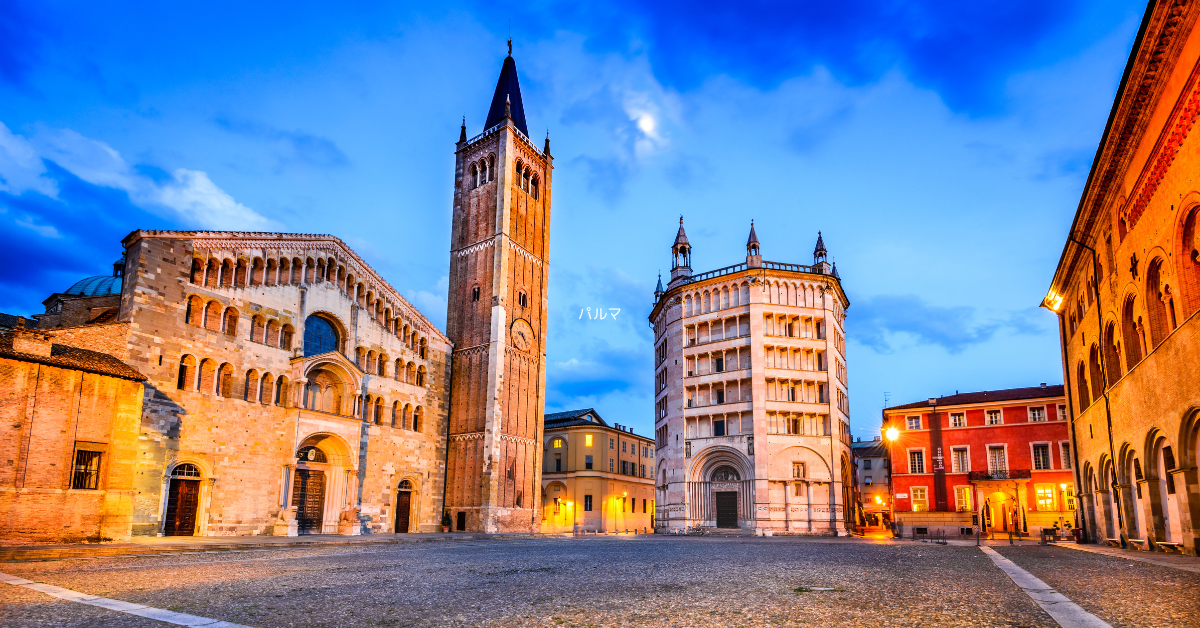
The city is home to Romanesque architecture such as the Parma Cathedral, an octagonal baptistery, and historic theaters. It’s also the birthplace of the Renaissance master Antonio Allegri da Correggio, commonly known as Correggio, making it a culturally rich location.
| Tourist Spot | Features |
|---|---|
| Parma Cathedral | A prime example of Romanesque architecture, known for its frescoes |
| Baptistery (Battistero) | Octagonal structure made of pink marble |
| Teatro Regio | A historic opera house |
The Presence or Absence of Kanji for Parma
In Japanese, the city name “Parma” is typically written in katakana, a phonetic script used primarily for foreign words and names. Since Japanese employs logographic characters (kanji), forcing a kanji translation for foreign place names often introduces misinterpretations or misleading meanings.
Chinese may use “巴馬” as a phonetic transcription, but such representations don’t guarantee semantic accuracy and may overlap with unrelated locations. Japanese conventions, therefore, favor uniformity and clarity by sticking to katakana.
| Language | Example | Notes |
|---|---|---|
| Japanese | パルマ | Standard transcription that accurately reflects sound |
| Chinese | 巴馬 | Phonetic transliteration; overlaps with other place names |
| Symbolic | 掌・椰子 | Represent origin meanings; rarely used formally |
Symbolic Kanji Possibilities Based on Etymology
The term “Parma” stems from the Latin “palma,” meaning “palm (of the hand)”. It also relates to “palm tree,” adding a naturalistic, symbolic layer to the name.
While it may be tempting to assign kanji like “掌” or “椰子” based on etymology, such interpretations carry limited practical value in actual name usage. Kanji can distort the intended perception, especially when applied to proper nouns with global recognition.
| Origin Term | Meaning | Symbolic Kanji Candidates |
|---|---|---|
| palma | Palm of the hand | 掌 |
| palma | Palm tree | 椰子 |
| Palatium | Palace, high place (uncertain origin) | 宮、高台, etc. |
How Japanese Perceive Parma and Their Cultural Distance
Japanese people often feel deep respect and emotional connection to ancient cities. This sentiment mirrors how they perceive Kyoto or Nara—places where time has shaped beauty and cultural significance. Parma evokes a similar admiration for its accumulated historical depth.
Moreover, the city’s renowned prosciutto and Parmigiano-Reggiano cheese appeal to Japanese tastes. These culinary products act as bridges between taste and culture. The city’s art, often introduced through concerts and exhibitions, also enriches cross-cultural appreciation.
Parma and Sports: A Modern Connection
In recent years, Japanese sports fans have become familiar with “Parma Calcio 1913,” a professional Italian football club. Hidetoshi Nakata, a former Japanese international, once played for this team, contributing to its name recognition in Japan.
Sports offer a powerful way to foster global familiarity. Through televised matches, games, and social media, many young Japanese become aware of city names like Parma, prompting interest in its geography and culture.
| Club Name | League | Connection to Japan |
|---|---|---|
| Parma Calcio 1913 | Serie B (formerly Serie A) | Hidetoshi Nakata’s former club |
| Stadio Ennio Tardini | Located in Parma | Historic stadium and tourist site |
| How Sports Familiarize Cities | Effects |
|---|---|
| Through broadcasts, games | Memorization of city names |
| Player transfers | Fan-driven research and interest in location |
| Stadium visits and videos | Inspire travel and cultural interest |
Why Kanji is Avoided for Parma in Japan
In Japanese writing, clarity and accuracy take precedence when transcribing foreign place names. Assigning kanji to Parma could result in unwanted or misleading meanings. While “掌” may be semantically accurate in origin, describing a city as a “palm” may seem unusual or inappropriate in context.
Katakana, being phonetic and neutral in meaning, avoids such pitfalls. It’s also more aligned with international standards, ensuring consistency across languages and reducing confusion.
Conclusion
The city of Parma presents a multi-dimensional appeal, spanning cuisine, arts, history, and sports. Its name resonates deeply with many Japanese, and yet, when it comes to writing, the use of katakana remains the most accurate and respectful choice.
Choosing the right script for foreign names isn’t just a matter of orthography—it reflects a broader commitment to cultural understanding and global communication. Considering its diverse appeal, writing “Parma” in katakana ensures both accuracy and dignity in representation.