

The Spanish city of Alicante has no established kanji representation in Japanese. Instead, it is commonly written in katakana. Many Japanese people associate the city with hot, dry summers and mild, pleasant winters. This article explores the reasons behind that perception through the lenses of spelling, climate, culture, and sports.
No Kanji Exists for Alicante
Why Katakana is the Norm
Alicante is a city located in southeastern Spain, along the Mediterranean coast. Like many foreign place names, it is represented in katakana, which is the standard script for foreign words in Japanese.
There are several reasons why kanji is not used for Alicante. Primarily, there is little historical or cultural connection between Japanese and Spanish geographies. While Chinese or Korean locations may have kanji representations, European cities like Alicante typically do not.
There are anecdotal reports of the kanji “亜利観手” being used as an invented form, but this is unofficial and carries no widespread or formal usage.
| Writing System | Reason | Japanese Language Context |
|---|---|---|
| Katakana | Accurately reflects pronunciation | Standard for foreign words |
| Kanji (phonetic) | Can cause confusion or misinterpretation | Rarely used or recognized |
Thus, writing “Alicante” in katakana is considered the only appropriate and accurate representation in Japanese.
The Climate Image Japanese People Have of Alicante
Hot and Dry Summers, Warm and Comfortable Winters
Alicante has a typical Mediterranean climate, marked by hot, dry summers and mild winters. Unlike Japan, humidity is low, so the summer heat feels refreshing and manageable.
During winter, temperatures remain mild, often reaching around 15°C during the day, allowing visitors to go outside comfortably. These features make Alicante an attractive destination, especially for travelers looking to escape Japan’s cold seasons.
Annual Weather in Alicante (Reference Data)
| Month | Avg. High (°C) | Avg. Low (°C) | Rainfall (mm) |
|---|---|---|---|
| Jan | 17 | 6 | 27 |
| Apr | 21 | 11 | 33 |
| Jul | 31 | 21 | 3 |
| Oct | 25 | 15 | 66 |
The city’s stable weather conditions year-round contribute to its popularity as a travel destination.
Matching Climate with Japanese Travel Preferences
For Japanese tourists, climate is a major factor in choosing where to travel. Alicante’s warm winters are especially appealing during New Year holidays and early spring.
| Factor | Preferred by Japanese Tourists | Alicante’s Characteristics |
|---|---|---|
| Summer Comfort | Dry air and sunny skies | Low humidity and bright sun |
| Winter Temperatures | 10–15°C ideal | Daytime averages around 15°C |
| Rainfall | Low precipitation preferred | Low rainfall year-round |
| UV Exposure | Moderate sun is welcome | Strong sun, but pleasant dryness |
Tourist Appeal Across All Seasons
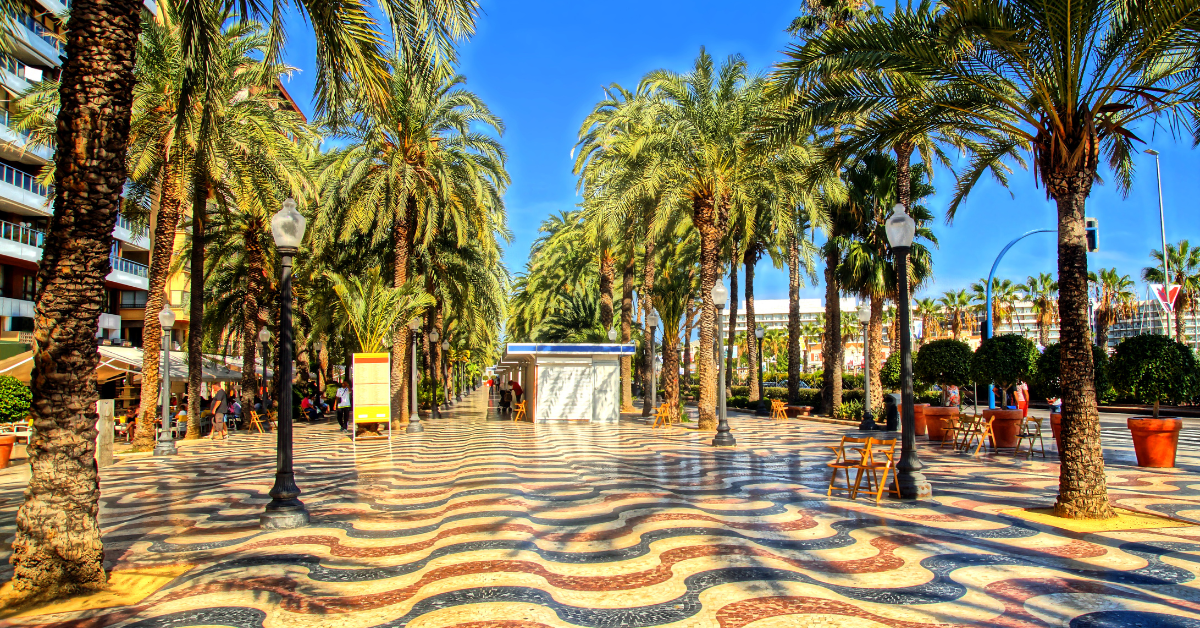
Due to its mild weather, Alicante has no clear off-season. Spring to autumn attracts beachgoers, while winter offers comfortable city exploration. The historic city center, lined with stone-paved streets and medieval architecture, offers a rich cultural experience.
Furthermore, Mediterranean seafood and paella delight food-loving Japanese visitors, adding to the city’s charm.
Why Katakana Became the Standard for Foreign Place Names
Background of Increasing Katakana Usage
Starting in the Meiji era, Japan began rapidly internationalizing. Foreign place names shifted from obscure kanji to katakana, which better reflects pronunciation and avoids semantic confusion.
This shift extended to city names:
| City Name | Former Kanji Use | Current Use |
|---|---|---|
| London | 倫敦 | ロンドン |
| Paris | 巴里 | パリ |
| Alicante | None | アリカンテ |
The trend shows a clear prioritization of phonetic accuracy over meaning in modern Japanese.
Sports Culture in Alicante
Local Club and the Excitement of Football
Alicante is not just about tourism and climate—it also shines in sports, particularly football. The local team, Hércules CF, has a proud history and has competed in Spain’s top division in the past.
Their home stadium, José Rico Pérez Stadium, is a hub of energy during matches, turning the city into a festival-like atmosphere. For locals, the club is a source of identity and community pride.
Sports Tourism and Event Integration
In addition to football, Alicante hosts various sports events such as beach volleyball tournaments, marathons, and triathlons. These events attract international participants and spectators alike.
For Japanese travelers, this means opportunities for active tourism, combining sightseeing with participation or viewing of local sports culture.
| Activity | Alicante’s Features |
|---|---|
| Football | Historic local club, well-equipped stadium |
| Beach Volleyball | Frequent summer tournaments |
| Marathon Events | Courses designed around scenic routes |
| Weather Suitability | Ideal year-round conditions for outdoor sports |
| Compatibility | Great for active Japanese travelers |
Conclusion
While “Alicante” has no corresponding kanji, this is not a limitation. On the contrary, katakana offers clarity, accuracy, and universal recognition.
The city is widely appreciated by Japanese visitors for its climate—dry yet pleasant summers and comfortably warm winters. Combined with its rich tourism and sports scene, Alicante emerges as a multifaceted destination.
With its unique blend of exotic charm, stable weather, culinary delights, and local sports, Alicante is quickly becoming a new favorite among Japanese travelers seeking a fresh kind of overseas experience.