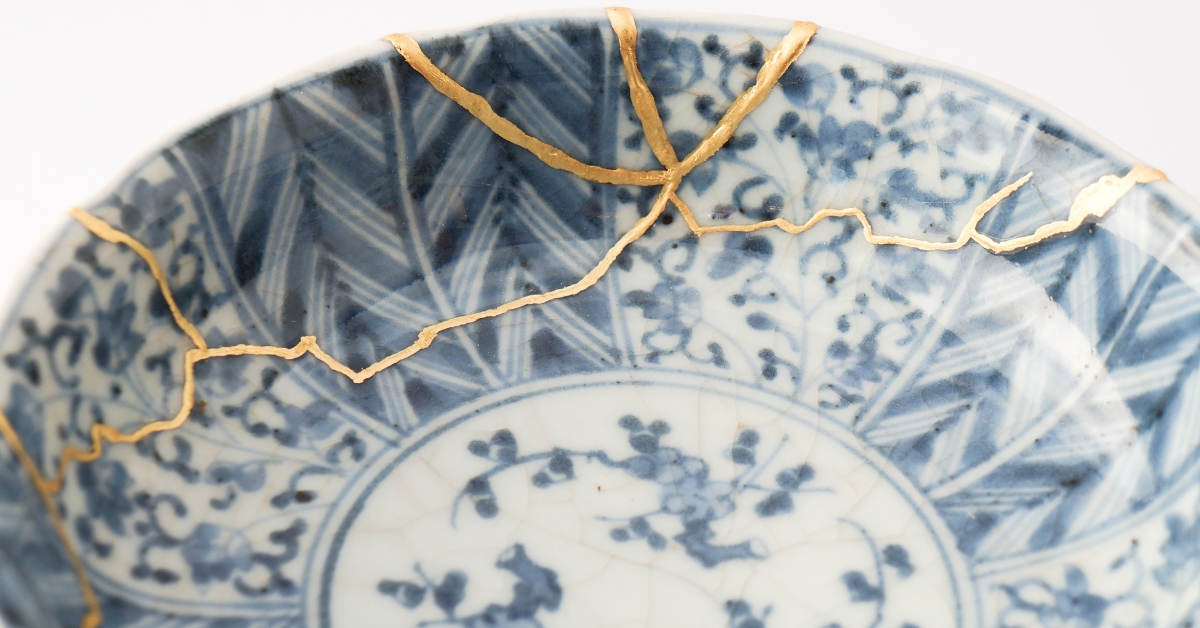

Kintsugi is a traditional Japanese technique of repairing broken ceramics using lacquer and gold powder. Rather than hiding the cracks, this method highlights them as part of the object’s history, reflecting a philosophy that has gained international attention, particularly in art and mindfulness contexts. This article explores the meaning, origins, techniques, and global impact of Kintsugi.
What is Kintsugi?
The Meaning and Technique Behind Kintsugi
Kintsugi is a unique Japanese method of restoring broken pottery by bonding the fragments with lacquer and decorating the seams with gold or silver powder. It originated during the Muromachi period and evolved alongside Japan’s tea culture, where the restored items were considered even more valuable than before they were broken.
Unlike conventional repair, Kintsugi does not try to hide the cracks. Instead, it celebrates them as part of the object’s life story. This idea is deeply rooted in the Japanese aesthetic of wabi-sabi, which values imperfection and impermanence.
| Element | Description |
|---|---|
| Repair Method | Lacquer and gold powder enhance the damaged parts |
| Materials | Natural lacquer, gold powder, silver powder, brass powder |
| Cultural Background | Rooted in tea culture and the wabi-sabi aesthetic |
| Purpose | To restore functionality while enhancing beauty |
Why is Kintsugi Gaining Global Attention?
The Beauty of Imperfection
Kintsugi has captivated audiences worldwide due to its philosophy of finding value in imperfection. In contrast to Western ideals of perfection, Kintsugi embraces flaws, suggesting that “beauty can emerge precisely because of what was broken.”
This concept resonates on an emotional level as well. It promotes self-acceptance and has been adopted in mental health practices as a metaphor for healing emotional wounds.
Furthermore, in a time of rising environmental awareness, Kintsugi’s ethos of “repair, not replace” aligns with sustainability and conscious consumption.
| Perspective | Value Provided by Kintsugi |
|---|---|
| Psychological | Self-acceptance, emotional healing, resilience |
| Aesthetic | A new way of seeing flawed objects as beautiful |
| Societal | Symbol of sustainability and circular living |
How the Kintsugi Repair Process Works
A Delicate, Handcrafted Process
The process of Kintsugi is intricate and requires time, patience, and craftsmanship. No two restorations are exactly alike, which makes each repaired piece completely unique.
| Step | Description |
|---|---|
| Cleaning the Pieces | Removing dirt and oils to ensure good adhesion |
| Bonding | Carefully joining fragments using raw lacquer |
| Drying | Naturally drying the piece over days or weeks |
| Shaping | Smoothing out the bonded areas |
| Decorating | Applying gold or silver to the seams |
| Final Drying | Allowing the piece to fully cure before use |
Each step reflects not just technique, but also the artisan’s philosophy and attention to detail.
Kintsugi in the Modern World
From Art to Fashion and Mental Wellness
Today, Kintsugi is applied beyond ceramics, influencing jewelry, fashion, furniture, and contemporary art. Many designers incorporate Kintsugi-inspired patterns or motifs, and even broken fragments themselves are transformed into elegant objects.
The word “Kintsugi” is now used internationally, often in the context of self-love and emotional recovery. In educational and therapeutic settings, its message of embracing differences and celebrating resilience has made it a symbol of diversity and psychological strength.
| Field | Application |
|---|---|
| Art and Design | Used in jewelry, interiors, and visual art |
| Mental Wellness | Metaphor for healing and embracing one’s flaws |
| Education | Promotes self-acceptance and diversity |
The Deeper Lessons of Kintsugi
Kintsugi offers not just a repair technique, but a way of thinking about life and relationships with objects. Just as broken pottery can become more beautiful, our personal scars and stories can also become sources of strength.
| Perspective | Takeaway |
|---|---|
| Aesthetics | Imperfection can hold its own beauty |
| Environmental | Repair rather than discard – a sustainable mindset |
| Psychological | Transforming pain into growth |
| Social | Embracing diversity and imperfection in others |
The time and care invested in each repair reminds us of the value of slowness and mindfulness. Through Kintsugi, we rediscover how to nurture deeper, more meaningful relationships with the objects and people around us.
Conclusion
Kintsugi is more than a technique for repairing ceramics. It is a philosophy that teaches us to embrace brokenness as a form of beauty. By reconnecting pieces with gold, it invites us to see damage not as the end, but as the beginning of something more profound.
In a world that often prioritizes perfection and speed, Kintsugi reminds us to slow down, accept imperfections, and find strength in healing. It serves as a powerful metaphor for life: what has been broken can become stronger, more beautiful, and more valuable than before.