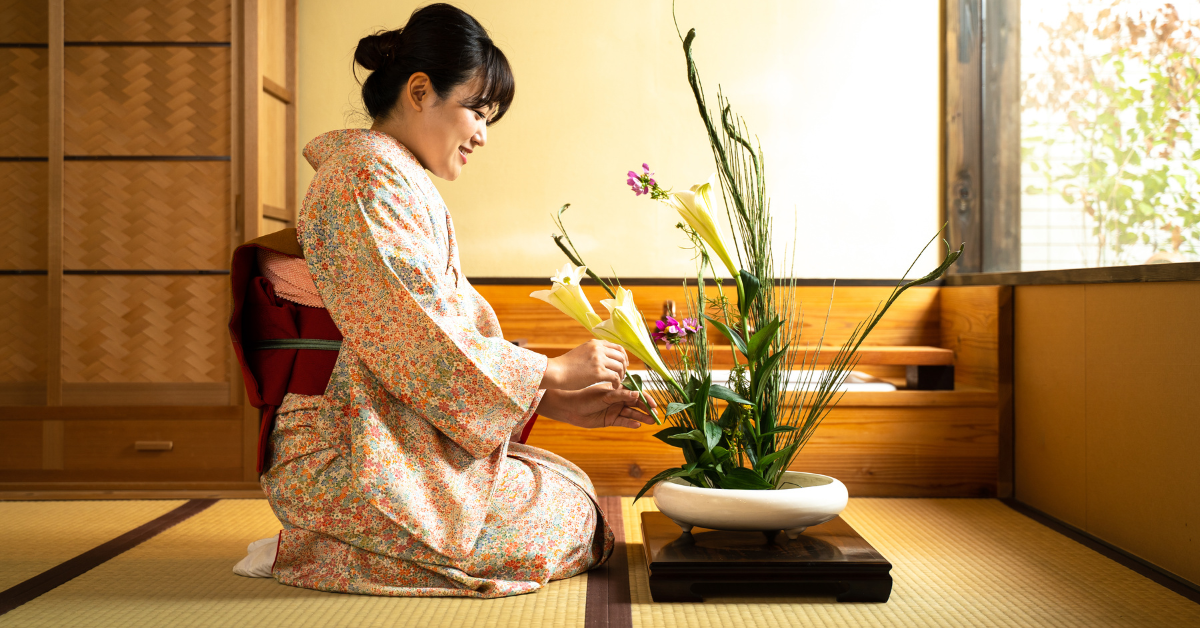


Ikebana, the Japanese traditional art of flower arrangement, is more than just decorative. It is an artistic expression rooted in harmony, spirituality, and the beauty of silence. This article explains the meaning, history, characteristics, and modern enjoyment of Ikebana in a way that is easy for foreigners to understand.
- What Is Ikebana?
- History and Origins of Ikebana
- Major Ikebana Schools and Their Characteristics
- Basic Structure and Philosophy of Ikebana
- Differences Between Ikebana and Western Flower Arrangement
- Common Tools Used in Ikebana
- How Ikebana Is Enjoyed in Modern Times
- Tips for Foreigners Learning Ikebana
- Conclusion
What Is Ikebana?
Ikebana, written as “生け花” in Japanese, literally means “to give life to flowers.” However, it is far more than placing flowers in a vase. It is an artistic act of discovering beauty through balance, space, and natural forms.
In Ikebana, the emphasis is on seasonal awareness, spatial composition, and subtle expression. Japanese aesthetics such as “ma” (space) and the concepts of “wabi” and “sabi” are deeply reflected in its practice.
Ikebana is not only a visual expression but also a spiritual activity that provides inner peace. Both creators and viewers can find emotional and mental fulfillment through this art form.
History and Origins of Ikebana
Ikebana traces its roots to Buddhist rituals, particularly the practice of offering flowers to the Buddha known as kue (供花), which spread in Japan around the 6th century.
Over time, this ritual evolved into an artistic form. During the Muromachi period, the Rikka style was developed, which formalized flower arrangements for the aristocracy and samurai class. By the Edo period, it had spread to the common people and became a part of everyday artistic life.
| Period | Development Highlights |
|---|---|
| Buddhist Era | Began with floral offerings at temples |
| Muromachi | Rikka style emerged, formalized flower design |
| Edo Period | Became popular among commoners |
| Modern Times | Integrated with Western styles and evolved |
Major Ikebana Schools and Their Characteristics
There are several schools of Ikebana, each with distinct philosophies and styles. The three major schools are as follows:
| School | Characteristics |
|---|---|
| Ikenobo | The oldest school, valuing formal beauty. Features Rikka, Shoka, and freestyle forms. |
| Ohara | Known for “Moribana” using natural expressions and Western influences. |
| Sogetsu | Emphasizes freedom, modern styles, and artistic creativity. |
Basic Structure and Philosophy of Ikebana
Ikebana is built on a unique structure called “Sansai” (Three Elements) — Heaven, Earth, and Man. These represent natural harmony through three main stems arranged in balanced composition.
| Element | Meaning | Symbolic Placement |
|---|---|---|
| Heaven | Universe/Divine | Tallest branch at the top |
| Earth | Nature/Ground | Branch near the vase base |
| Man | Humanity | Middle branch connecting heaven and earth |
This triadic form is not just technical but an expression of a spiritual worldview that sees life as interconnected and balanced.
Differences Between Ikebana and Western Flower Arrangement
While Ikebana and Western-style flower arrangement may look similar, their purposes and values differ significantly.
| Item | Ikebana | Western Flower Arrangement |
|---|---|---|
| Artistic Purpose | Harmony with nature, inner stillness | Visual impact, colorful expression |
| Space Usage | Emphasizes empty space and minimalism | Fills space entirely with flowers |
| Style | Based on traditional forms and philosophy | Freestyle design, often ornamental |
| Flower Handling | Keeps natural forms intact | Frequently trims or modifies shapes |
Ikebana is often referred to as “an art that reflects the heart”, valuing introspection and spiritual growth.
Common Tools Used in Ikebana
In Ikebana, tools are as important as flowers. The choice of tools influences the work’s structure and longevity.
| Tool | Purpose |
|---|---|
| Flower Vase | Various types including ceramic, bamboo, and metal |
| Kenzan | Needle base used to secure flowers in place |
| Scissors | Special sharp scissors for cutting stems cleanly |
| Water Pitcher | Used to pour water into the vase |
Using proper tools enhances both the aesthetic quality and durability of the arrangement.
How Ikebana Is Enjoyed in Modern Times
Today, Ikebana has transcended tradition and become a global form of artistic expression. Workshops, exhibitions, and classes are held worldwide, attracting people from various cultural backgrounds.
In Japan, Ikebana is also appreciated as a way to bring peace and natural beauty into everyday life. Even placing a single seasonal flower in a small vase can embody the essence of Ikebana.
Furthermore, in today’s fast-paced world, Ikebana is increasingly valued as a method of mindful living, offering tranquility and focus through nature.
Tips for Foreigners Learning Ikebana
Ikebana is a powerful way for foreigners to experience Japanese culture firsthand. Many schools now offer classes in English, making it accessible to beginners worldwide.
| Learning Tip | Explanation |
|---|---|
| Knowledge of Flowers | Understanding seasonal plants enhances appreciation |
| Choosing a School | Select based on style and teaching approach |
| Heart-Form Connection | Combine technical skill with sincerity |
| English-Friendly Classes | More schools provide English materials and instruction |
Learning Ikebana offers not just technique, but cultural insight and emotional enrichment.
Conclusion
Ikebana is a uniquely Japanese art that expresses harmony between nature and humanity. While each school has its unique style, the shared values of respect for life and spiritual expression remain central.
As Ikebana continues to evolve, it is being rediscovered both in Japan and internationally as a form of emotional healing, cultural dialogue, and personal reflection. It will undoubtedly continue to inspire people around the world for generations to come.