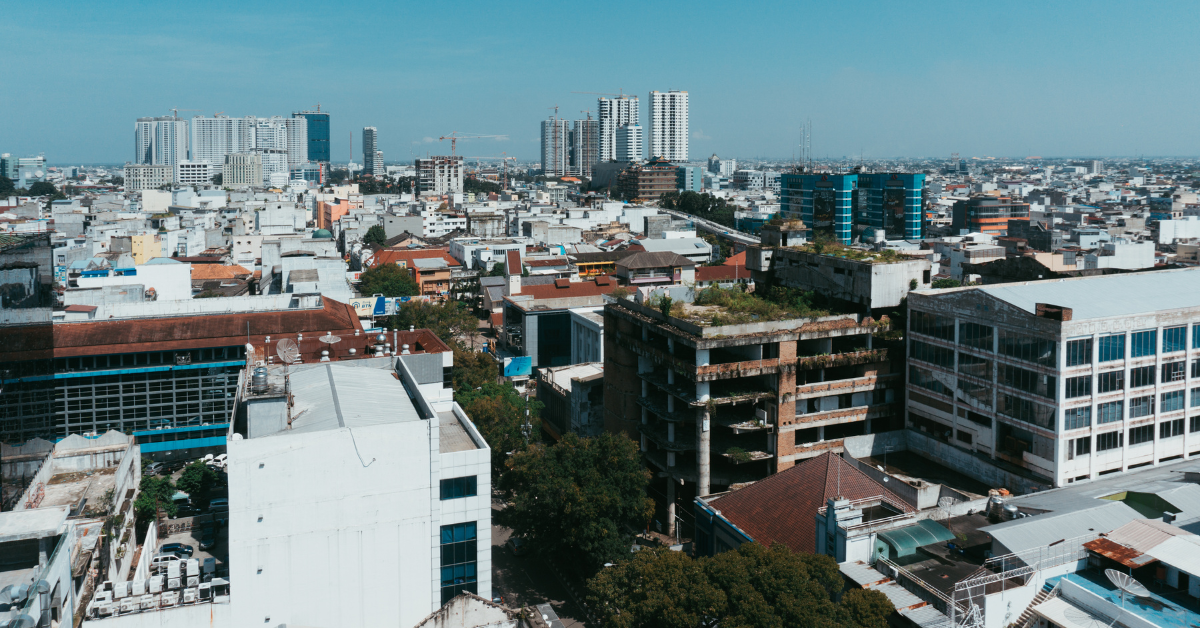


Medan, the largest city on Indonesia’s Sumatra Island, is not widely known in Japan. However, it holds numerous appealing aspects in economics, culture, tourism, and sports. This article explains the background of the kanji spelling “棉蘭”, common impressions among Japanese people, and provides a comprehensive overview of Medan’s future potential.
Overview and Geographic Position of Medan
Medan (Medan), located in the northern part of Sumatra Island, is the capital of North Sumatra Province and the largest city on the island. With a population exceeding 2.5 million, it ranks as the fourth-largest city in Indonesia. It continues to develop as a center of economy, logistics, and education, and is attracting increasing attention within the ASEAN region.
The city experiences a tropical rainforest climate, with high temperatures and humidity throughout the year. With abundant rainfall and rich greenery, it is also known for its coexistence with a lush natural environment, including volcanoes and lakes nearby.
| Category | Details |
|---|---|
| Location | North Sumatra, Indonesia |
| Population | Approx. 2.5 million |
| Major Airport | Kualanamu International Airport |
| Climate | Tropical Rainforest Climate |
| Geographic Features | Hot and humid; abundant natural resources |
What Does the Kanji “棉蘭” Mean?
The kanji “棉蘭” is used in Chinese as a phonetic translation of “Medan.” It uses “棉” (cotton) and “蘭” (orchid or orchid-like) to approximate the pronunciation rather than convey meaning. It’s a visual and phonetic interpretation rather than a literal one.
In Japanese, katakana is the standard for writing foreign place names. Thus, “棉蘭” is not used in Japanese public documents or media.
| Writing System | Language Used | Notes |
|---|---|---|
| メダン | Japanese | Commonly written in katakana |
| 棉蘭 | Chinese | Phonetic transliteration |
| Medan | English | International standard alphabet |
These variations in writing reflect cultural and linguistic backgrounds, highlighting how the perception of a city can differ across languages.
What Image Do Japanese People Have of Medan?
In Japan, Indonesia is often associated with Bali or Jakarta, and Medan is largely underrepresented in media and education. For many, Medan is just a vaguely familiar name rather than a well-known location.
In reality, Medan is a multi-ethnic city, where Malay, Chinese, and Indian communities coexist. Each group’s culture is integrated into daily life, especially through its rich food scene, featuring Malay, Chinese, and Indian cuisines side by side.
Religiously, Islam, Christianity, Buddhism, and Hinduism are all practiced, with places of worship often found near each other. This indicates a high level of tolerance and multicultural coexistence that would appear unique and valuable from a Japanese perspective.
| Common Impressions in Japan | Actual Characteristics |
|---|---|
| Lesser-known than Bali | Largest city in Sumatra |
| Perceived as homogeneous | Rich multi-ethnic and multicultural blend |
| Not seen as a tourist spot | Culturally, historically and naturally rich |
Educational institutions are also well-established, and many young people are learning English and Japanese, showing increasing international interest. Exchanges with Japan are likely to grow in the coming years.
Tourism and Business Appeal
Medan offers a variety of tourist attractions from its city center to the surrounding areas. Remnants from the colonial era, such as the Maimun Palace and Grand Mosque, give the city historical depth and visual charm.
Nearby, Lake Toba, one of the world’s largest caldera lakes, provides a breathtaking natural experience. The Bukit Lawang area is home to an orangutan sanctuary, making Medan a hub for eco-tourism.
| Tourist Spot | Features |
|---|---|
| Lake Toba | Natural beauty; cultural experiences |
| Bukit Lawang | Wildlife viewing; jungle trekking |
| Central Medan | Colonial buildings; markets; global cuisine |
On the business front, Medan is a key hub for manufacturing and agricultural exports, particularly palm oil, rubber, and coffee. Warehouses and industrial zones are expanding, and the city’s infrastructure is improving to support this growth.
The local government is proactively attracting foreign investments, offering tax incentives and streamlining licensing procedures, creating an environment conducive to Japanese corporate entry.
Medan’s Passion for Sports
Medan also stands out in the realm of sports. Football is extremely popular, with the local club PSMS Medan holding legendary status in Indonesia. The stadium is packed with energy on weekends as fans rally behind their team.
Among the youth, sports such as badminton and basketball are also widely enjoyed, with frequent local tournaments and school events fostering community spirit and athletic development.
| Sport | Popularity | Notes |
|---|---|---|
| Football | High | Home of PSMS Medan; strong community identity |
| Badminton | Medium | National sport; high skill level |
| Basketball | Medium | Popular among youth; expanding in schools |
Furthermore, there is growing potential for international sports exchange, and Medan may well be a future host for international events, leveraging sports for regional development and global visibility.
Conclusion
Medan may be a city that many Japanese people have overlooked, but it is undeniably a vibrant and promising place. With its cultural diversity, economic growth, and dynamic sports culture, Medan has much to offer.
The kanji “棉蘭”, while not commonly used in Japanese, reflects how this city is recognized in different parts of Asia. By highlighting its tourism, economy, and sports, we gain a clearer picture of what Medan truly represents.
Now is the time for Japan to re-explore this hidden gem, fostering new relationships and unlocking opportunities for collaboration, exchange, and mutual growth.