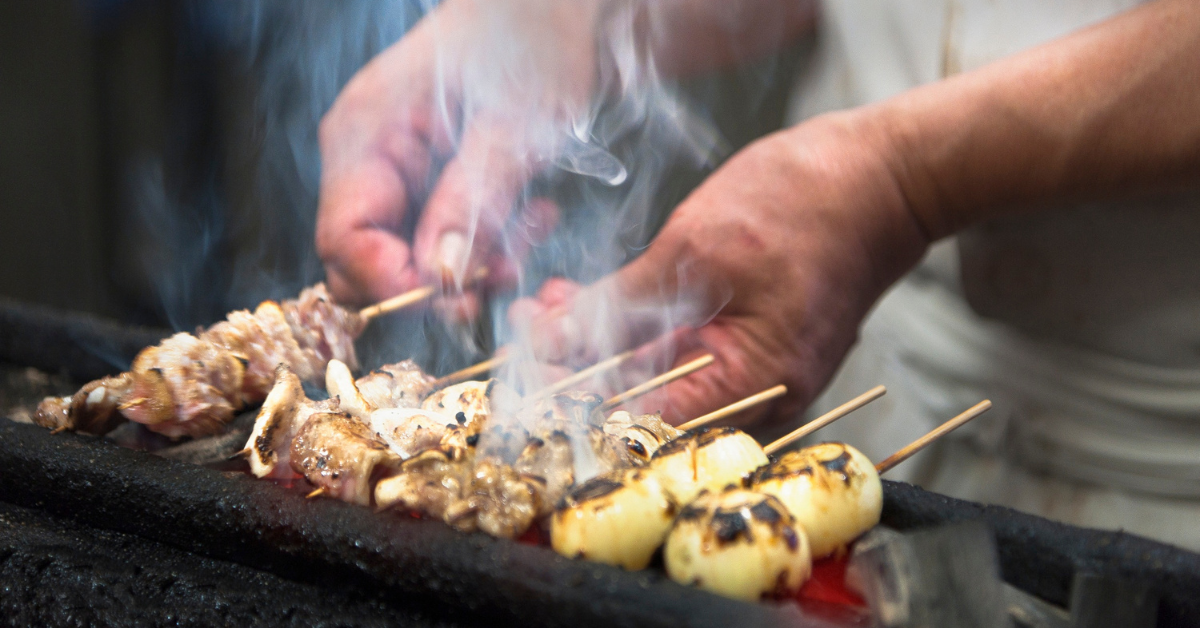


Yakitori, or grilled chicken skewers, is a popular dish not only in Japan but also increasingly appreciated around the world. This article provides a detailed explanation of what yakitori is, covering its definition, common cuts, ordering styles, cultural context, and how foreign visitors can best enjoy it.
What is Yakitori
Grilled Chicken Skewers on Bamboo Sticks
Yakitori is a traditional Japanese dish consisting of bite-sized pieces of chicken skewered on bamboo sticks and grilled, typically over charcoal. The most common seasonings are salt or tare, a sweet and savory soy-based sauce. Each restaurant often has its own secret tare recipe, passed down for generations.
In Japan, yakitori is part of daily life. The sight and smell of skewers being grilled outside small shops in the evening is a familiar part of the urban landscape. In English, it’s usually spelled “Yakitori”, and it ranks among iconic Japanese dishes alongside sushi and ramen.
Popular Yakitori Cuts and Names
Different Textures and Flavors by Chicken Part
There are many types of yakitori depending on the chicken part used, and knowing their differences enhances the dining experience. Below is a table of the most common cuts:
Main Yakitori Cuts
| Japanese Name | English Name | Description | Flavor Profile |
|---|---|---|---|
| Momo | Thigh | Upper leg meat | Juicy and rich |
| Mune | Breast | Chest meat | Light and tender |
| Negima | Chicken and Leek | Alternating thigh and scallion | Balanced meat and vegetable taste |
| Tsukune | Chicken Meatball | Ground chicken meatball | Soft and mildly sweet |
| Kawa | Skin | Chicken skin | Crispy and flavorful fat |
| Seseri | Neck Meat | Neck muscle | Chewy with strong umami |
| Reba | Liver | Liver | Rich and nutritious |
| Hatsu | Heart | Heart | Firm and unique texture |
Yakitori Seasonings: Salt vs. Tare
| Seasoning | Flavor Characteristics | Best Cuts | Other Notes |
|---|---|---|---|
| Salt | Simple, enhances natural flavor | Seseri, Hatsu, Kawa | Great with alcohol |
| Tare | Sweet, rich flavor | Momo, Tsukune, Liver | Kid-friendly |
How to Order Yakitori and Basic Etiquette
Even First-Timers Can Order With Confidence
At yakitori restaurants, you can typically order skewers individually. Many people also choose “omakase”, where the chef selects a recommended set for you. When ordering, you may be asked to choose between salt or tare for seasoning.
In Japan, it is common to eat the skewer as is, without removing the meat from the stick. After finishing, place used skewers into the dedicated holder on the table. This etiquette is part of the yakitori experience.
Yakitori Restaurant Types and Atmosphere
| Type | Atmosphere | Features |
|---|---|---|
| Izakaya Style | Casual | Pairing food with drinks, lively |
| Specialty Shops | Calm, refined | Focused on premium ingredients and techniques |
| Food Stalls & Standing Bars | Open-air, relaxed | Budget-friendly and tourist-friendly |
Yakitori and Japanese Culture
A Dish Rooted in Everyday Life
Yakitori is not reserved for special occasions. It’s a part of daily life in Japan. Whether it’s a drink with coworkers, a casual family meal, or a quick bite from a festival stall, yakitori is everywhere.
What’s more, regional variations add interest. In Fukuoka, coiled chicken skin skewers are a local specialty, while in Aichi, miso-based tare is commonly used. Yakitori truly reflects the regional diversity of Japanese cuisine.
Yakitori Experience for Foreign Visitors
Practical Tips for Travelers
For foreign tourists, yakitori is a great way to try authentic Japanese flavors in an easy and enjoyable way. Many restaurants now offer English menus and can accommodate dietary needs.
Vegetarian-Friendly Yakitori Options
| Vegetable Skewer | Flavor Profile |
|---|---|
| Shishito Peppers | Slight spice and smoky aroma |
| Shiitake Mushrooms | Meaty texture and deep umami |
| Leek (Negi) | Turns sweet when grilled |
| Green Bell Pepper | Mild bitterness, adds color |
| Asparagus | Crisp and refreshing |
Yakitori offers endless combinations, even for repeat visitors. You can also try comparing flavor differences across shops during your trip—it adds a fun layer to your culinary adventure.
Conclusion
Yakitori is a simple yet deeply cultural Japanese dish. With each cut and seasoning offering its own appeal, even first-time visitors can enjoy a personalized and delicious experience. Learning about proper ordering and etiquette allows you to connect with Japan’s culture of hospitality and respect for food.
Next time you visit Japan, we recommend trying yakitori—not only as a meal, but as a gateway to understanding Japan’s culinary spirit.